Everyone who sees it asks what it cost. You get to say: I grew it.
A bonsai is a tree of the kind that lives a hundred years, with its roots in a pot. It asks for ten minutes a day and a sunny shelf. Then people start stopping in front of it: guests, neighbors, your kids' friends. How old is it? Where did you buy it? What did it cost? And every time, the answer is you.

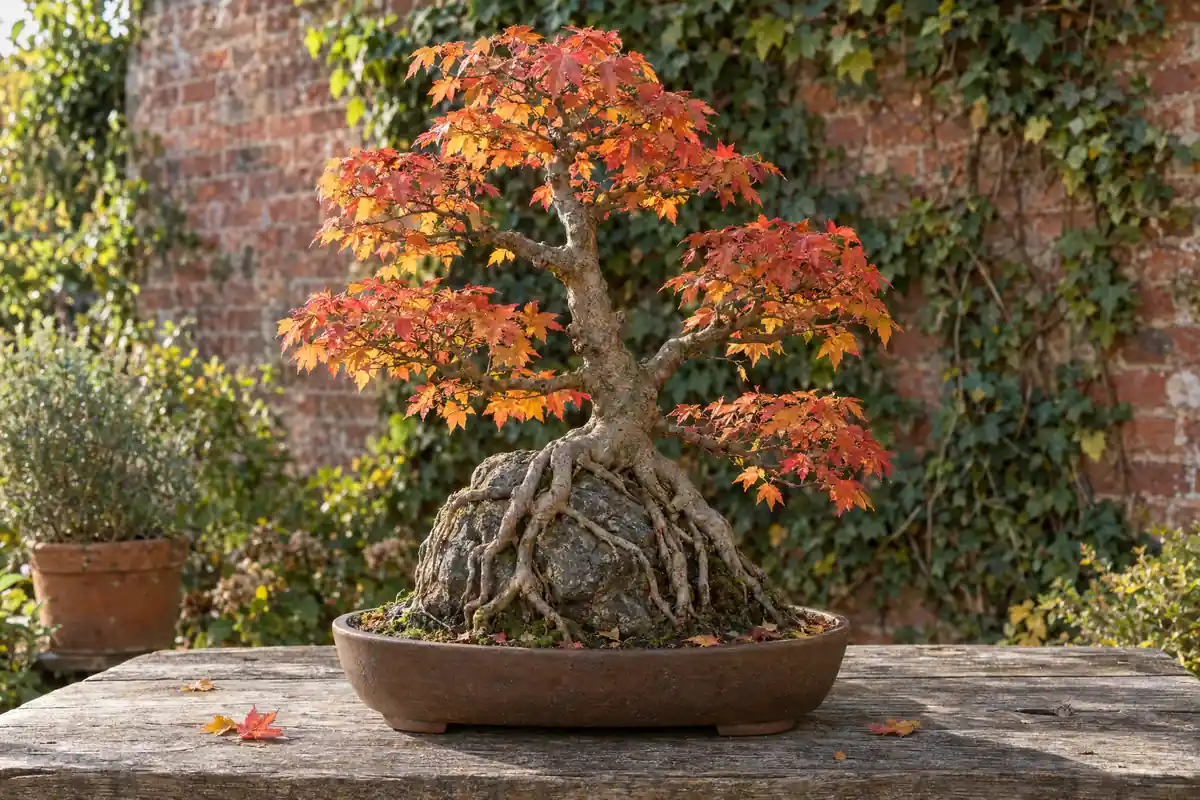
The whole bonsai method, from zero.
Killed one before? Start here.
- A tree to pass down to the ones you love
- The wild techniques too: roots over a rock
- What to do each month, in your hemisphere
- Why your last one died, and how to avoid it
Only for the next 9 buyers today
Other collections

A Desert on My Windowsill🌵 Succulents · both volumes+$9.90 USD $50.00
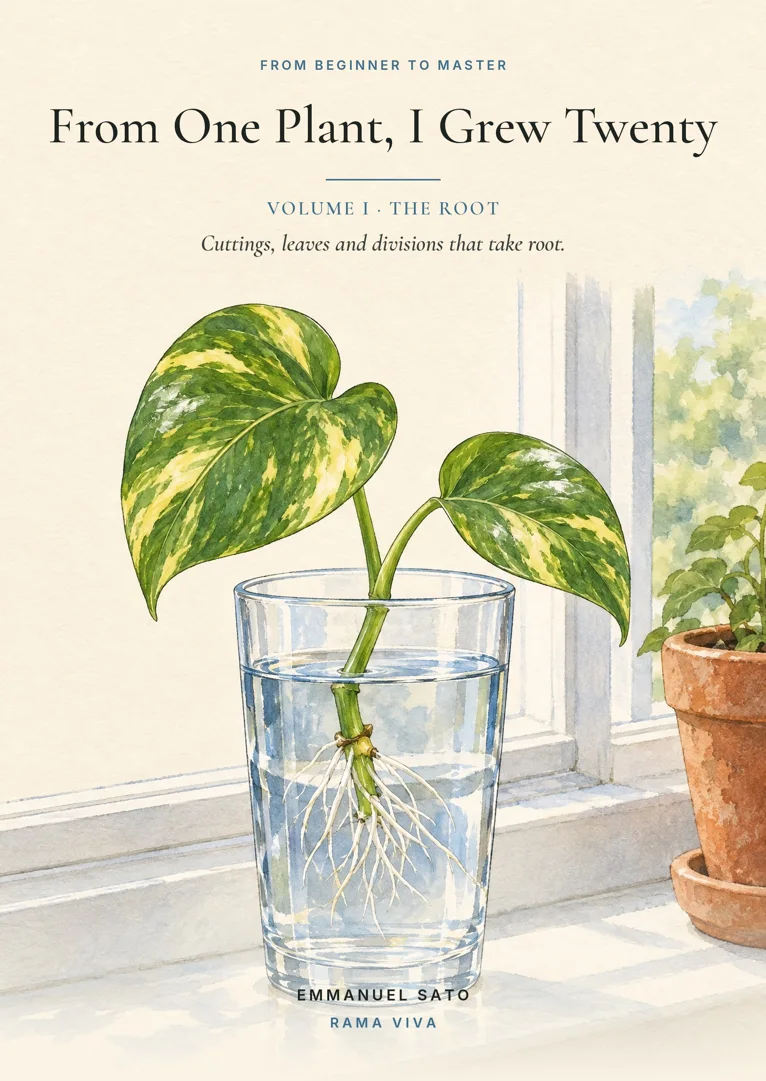
From One Plant, I Grew Twenty🌱 Cuttings · both volumes+$9.90 USD $50.00
What's in each volume
How you receive it
Payment terms
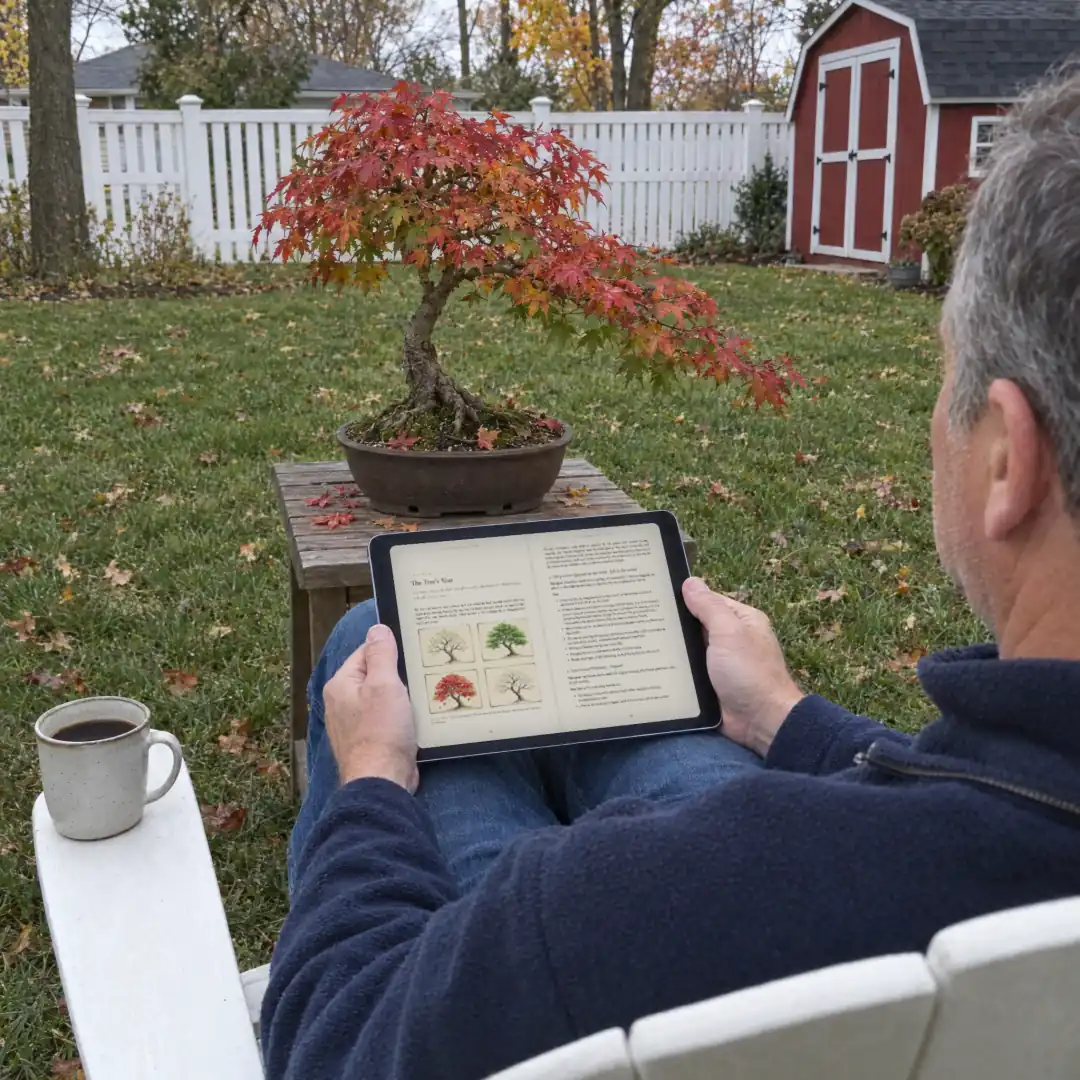
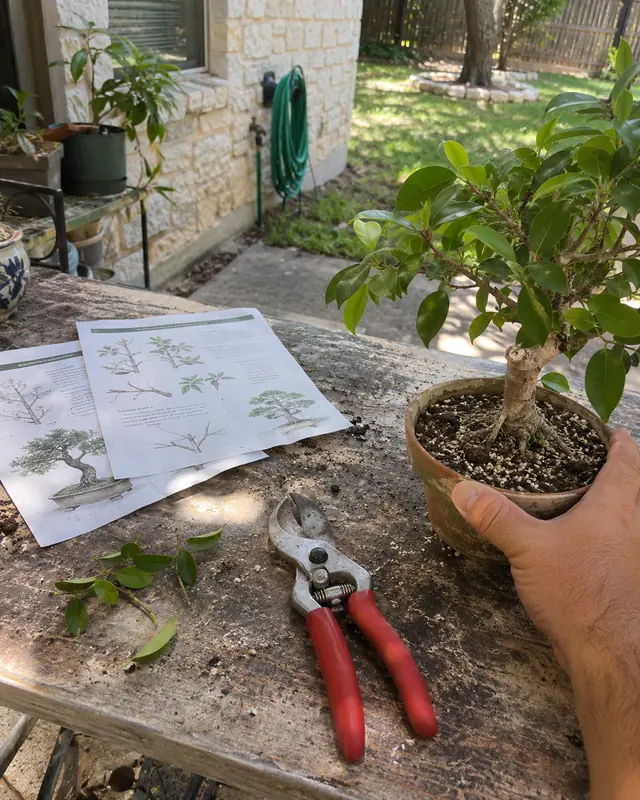
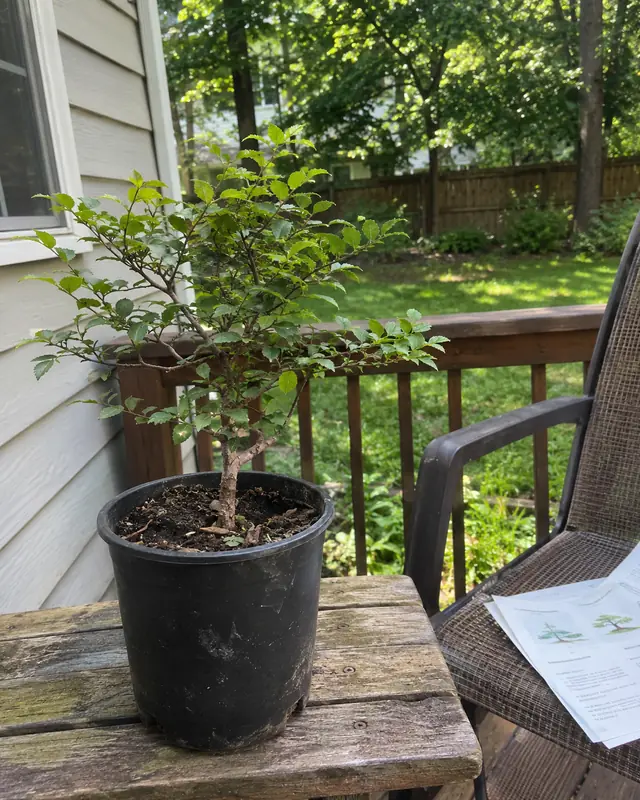
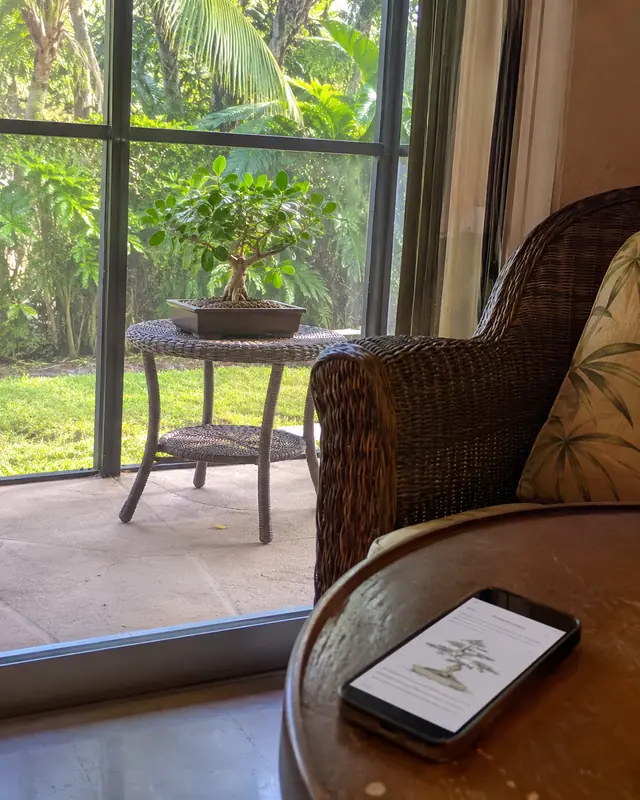
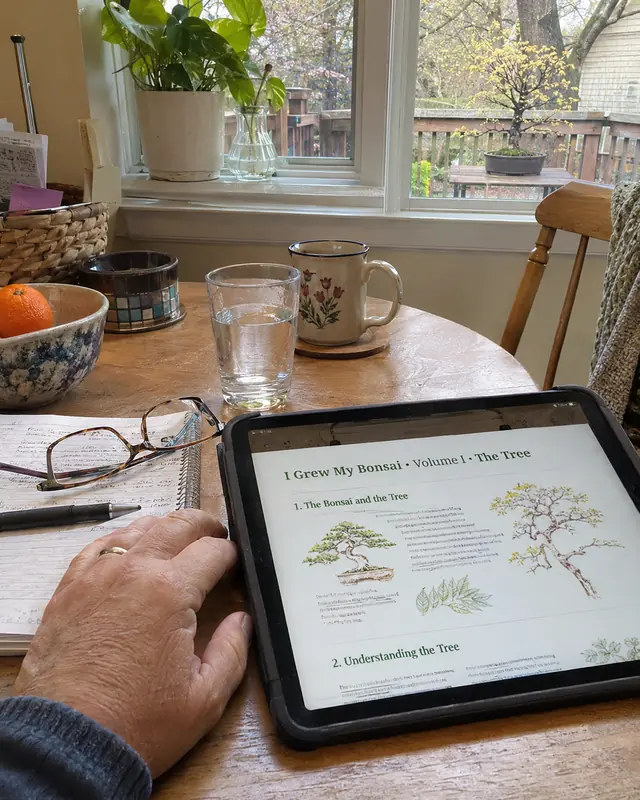
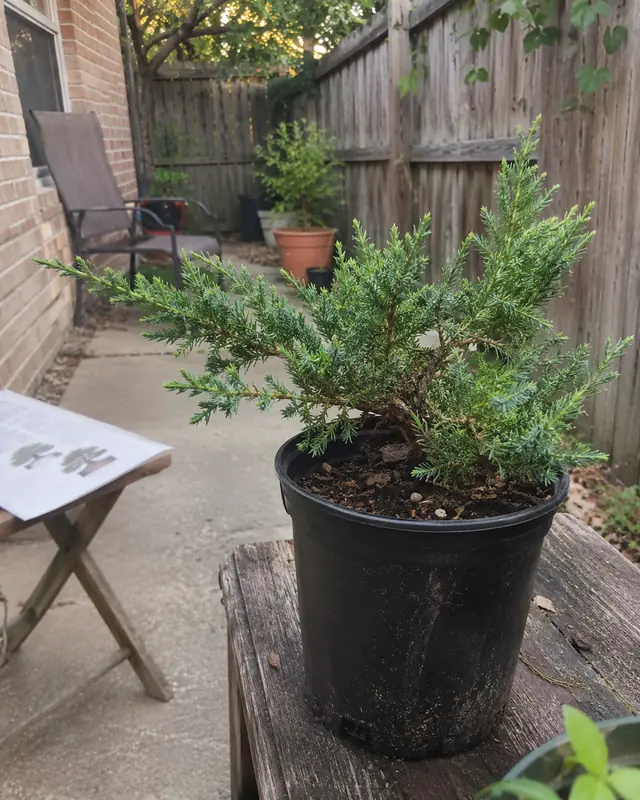
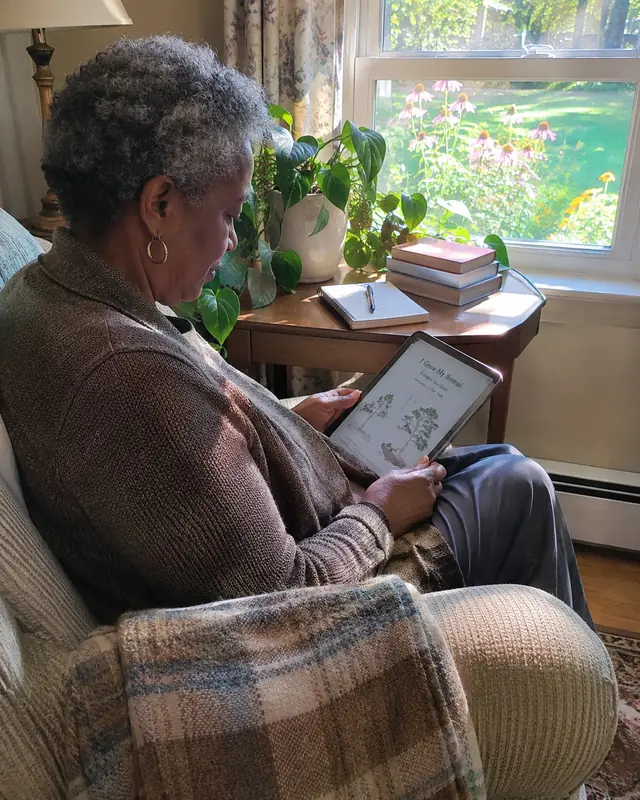
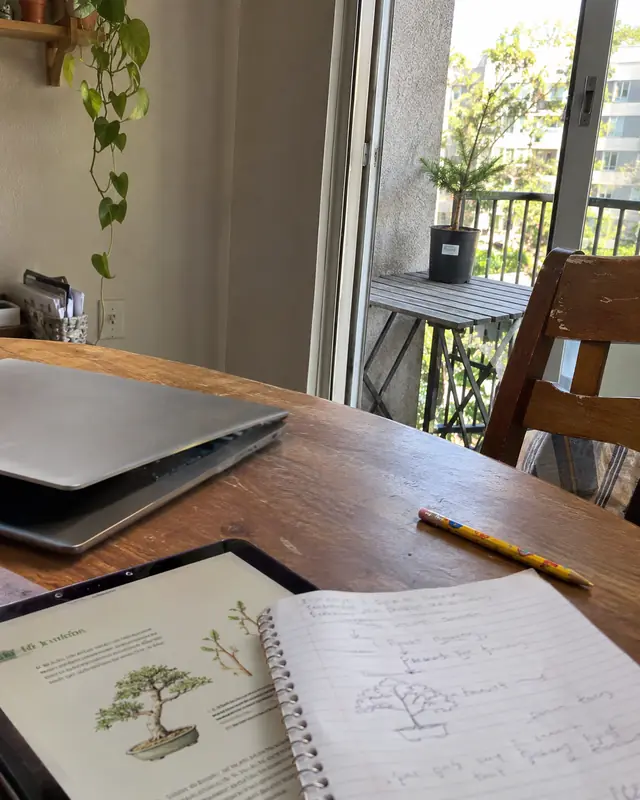
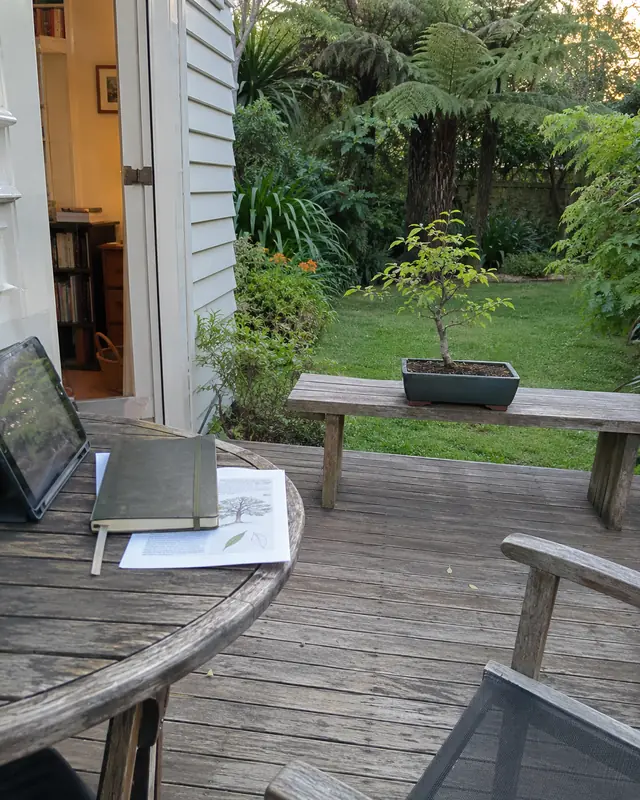
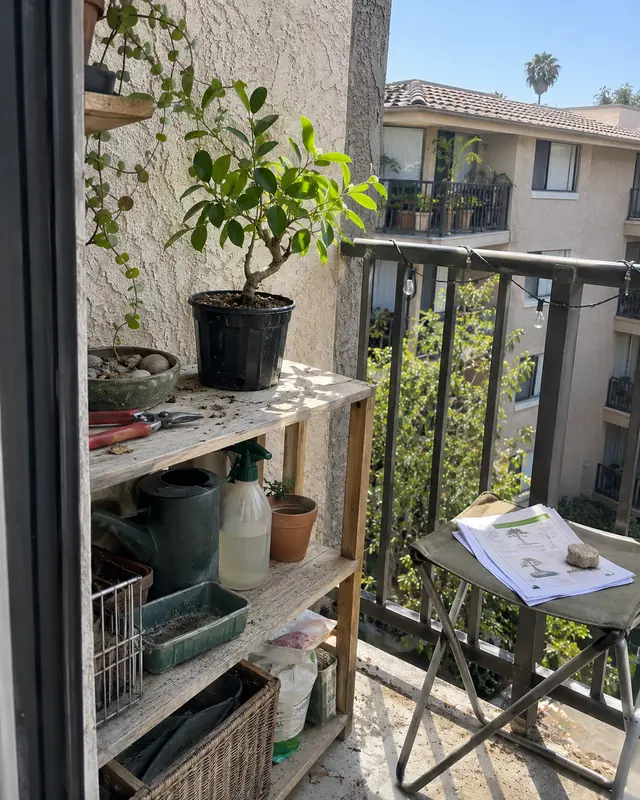
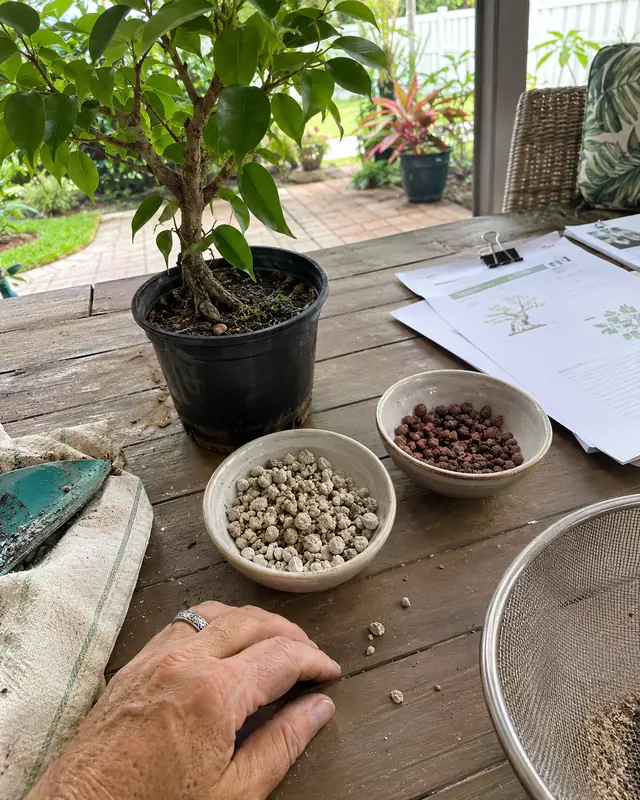
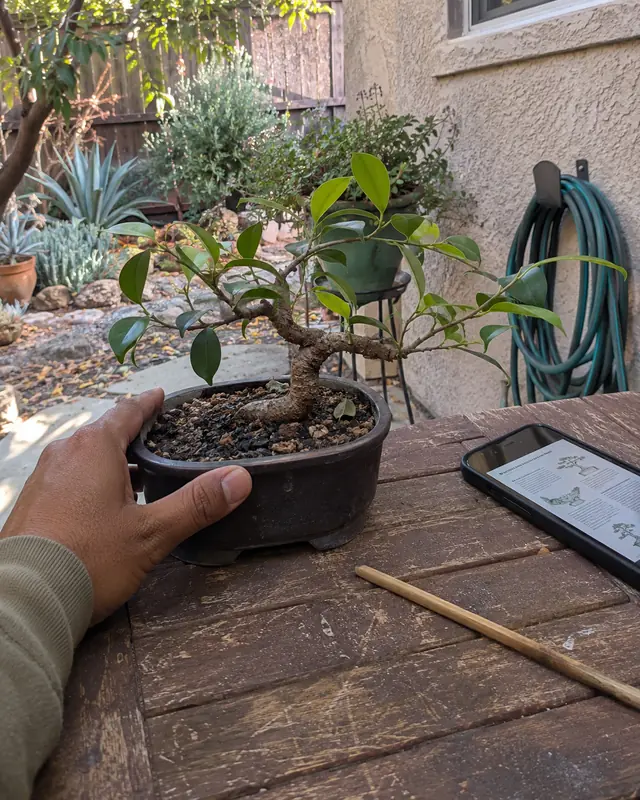
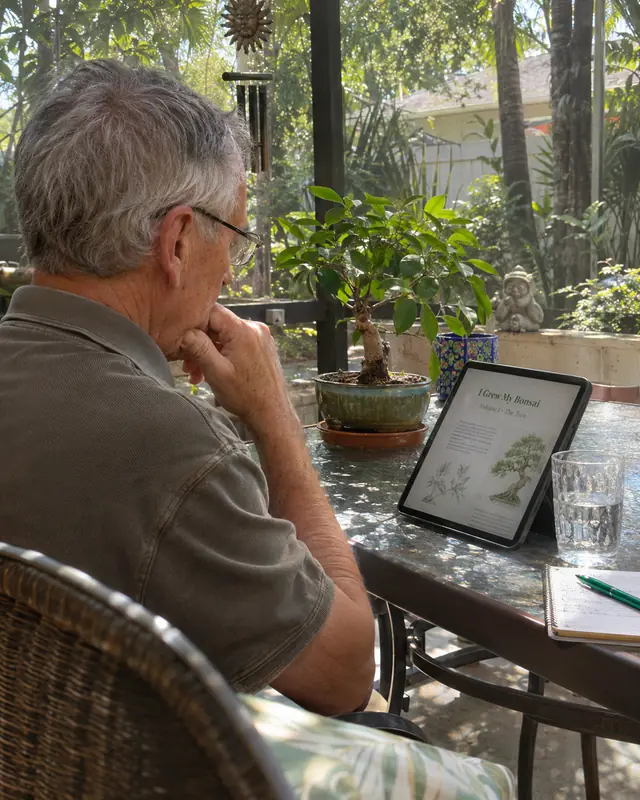
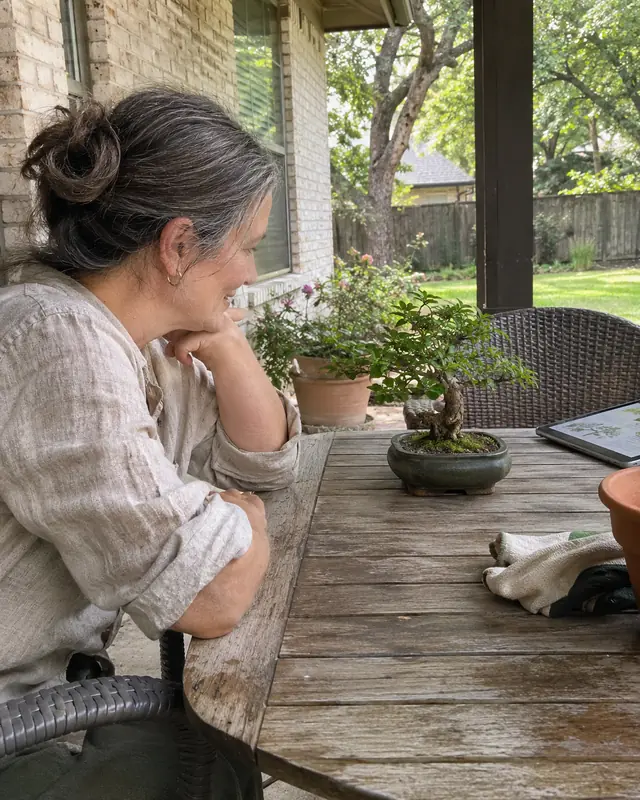
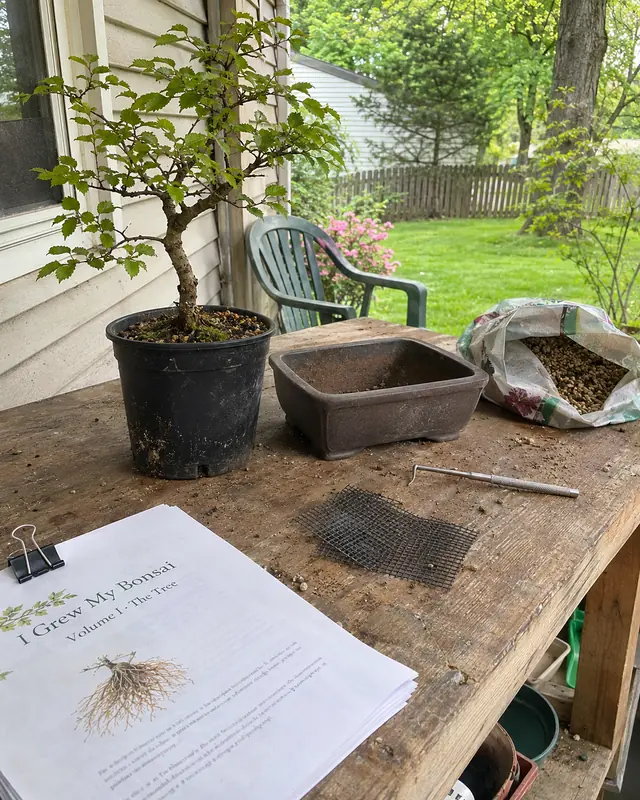
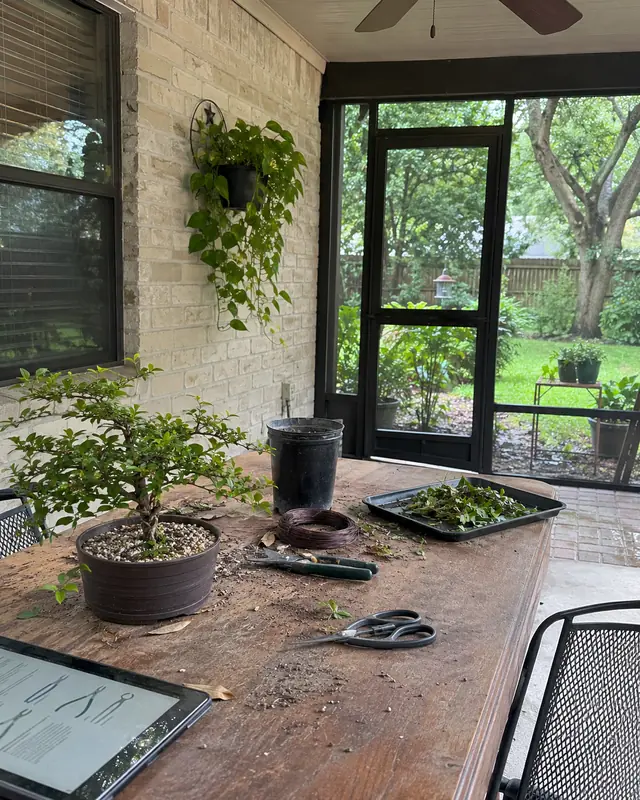
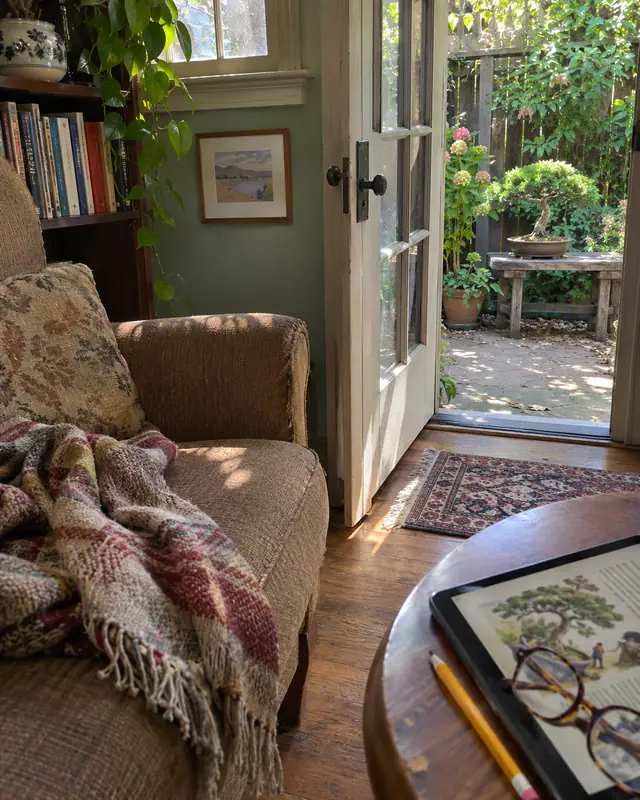
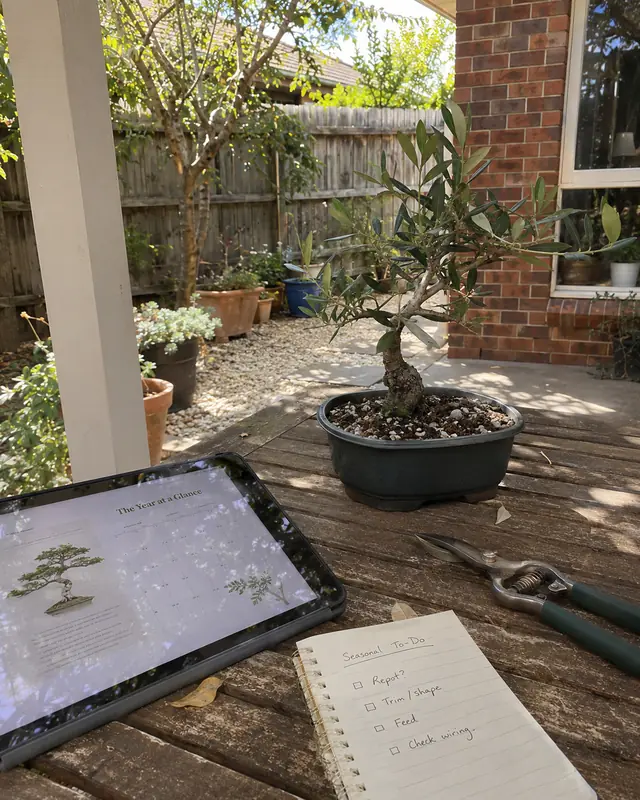
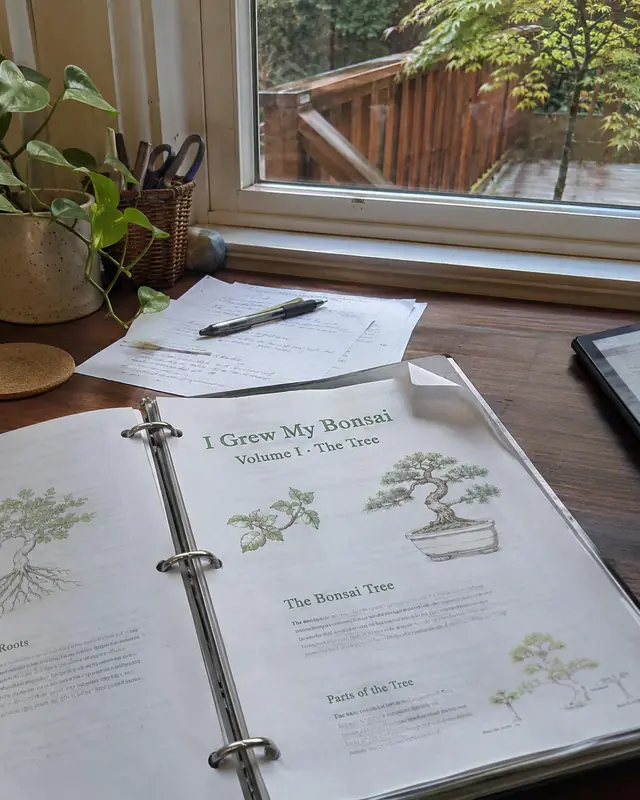
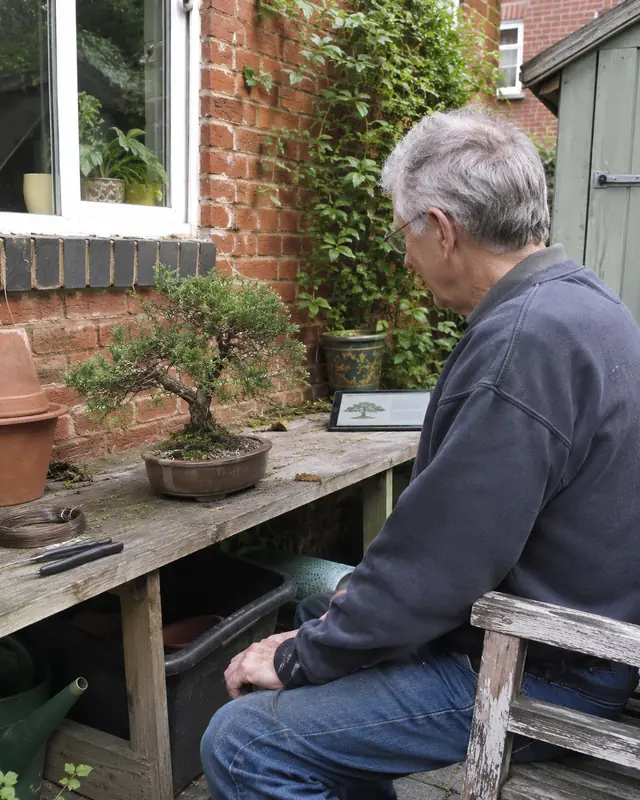
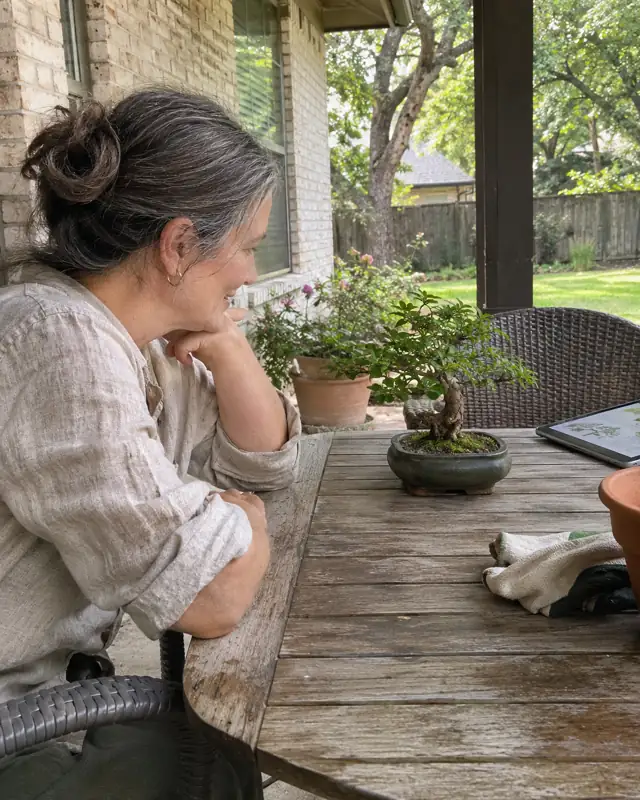
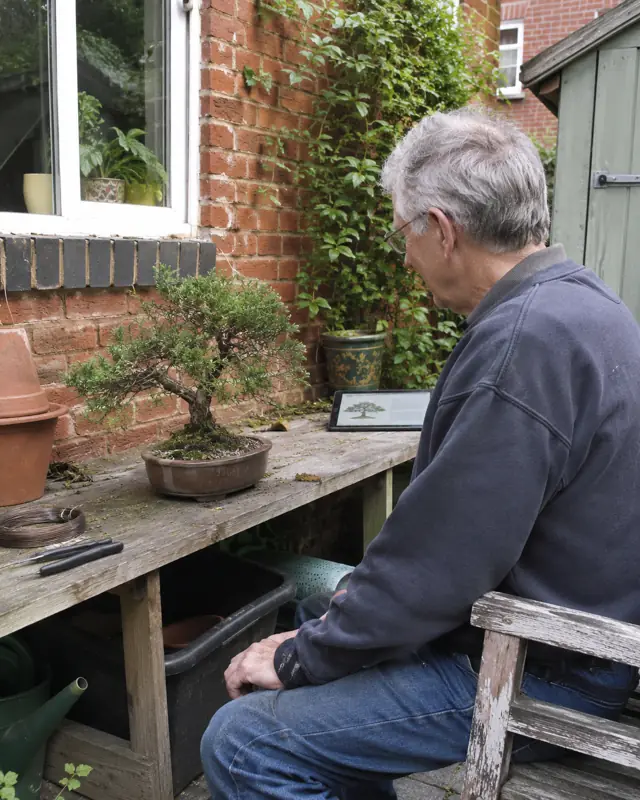
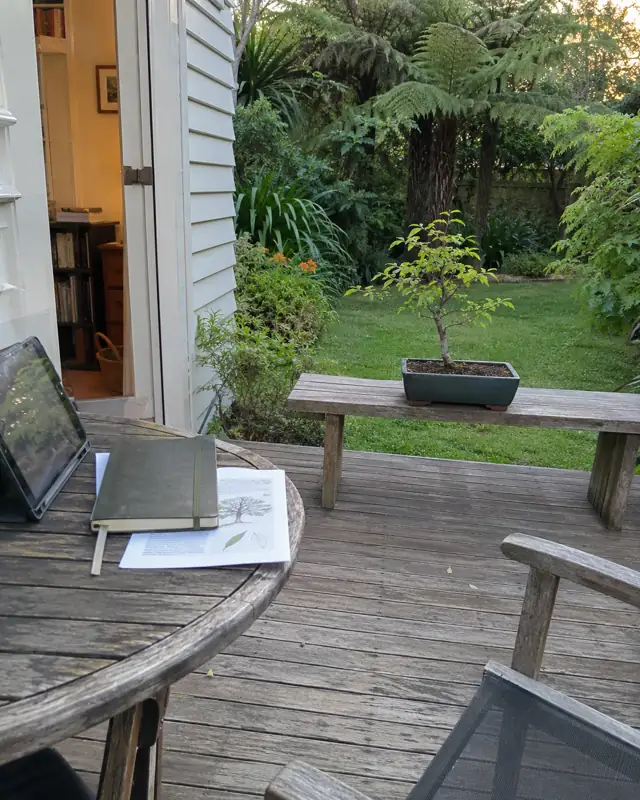
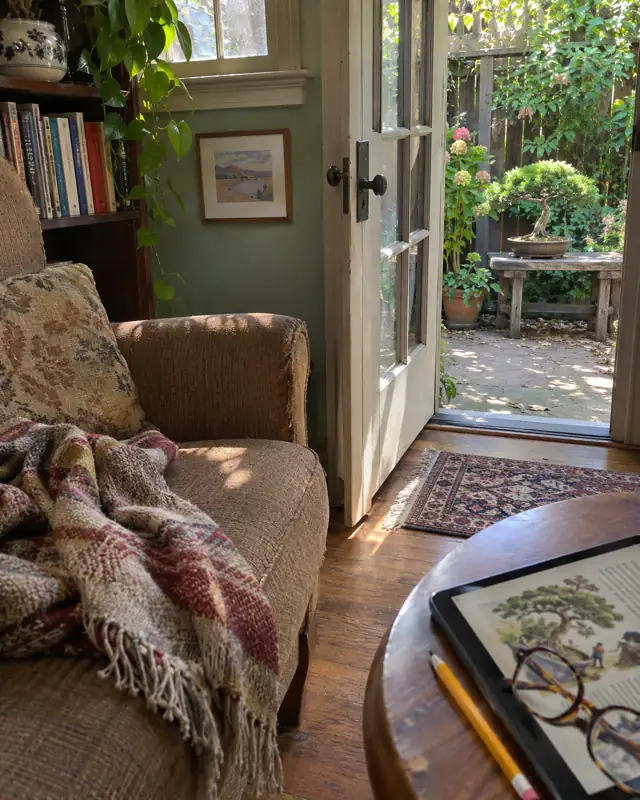
This will be your Sunday
A tree, a chapter open beside it, and ten quiet minutes.
The first reviews
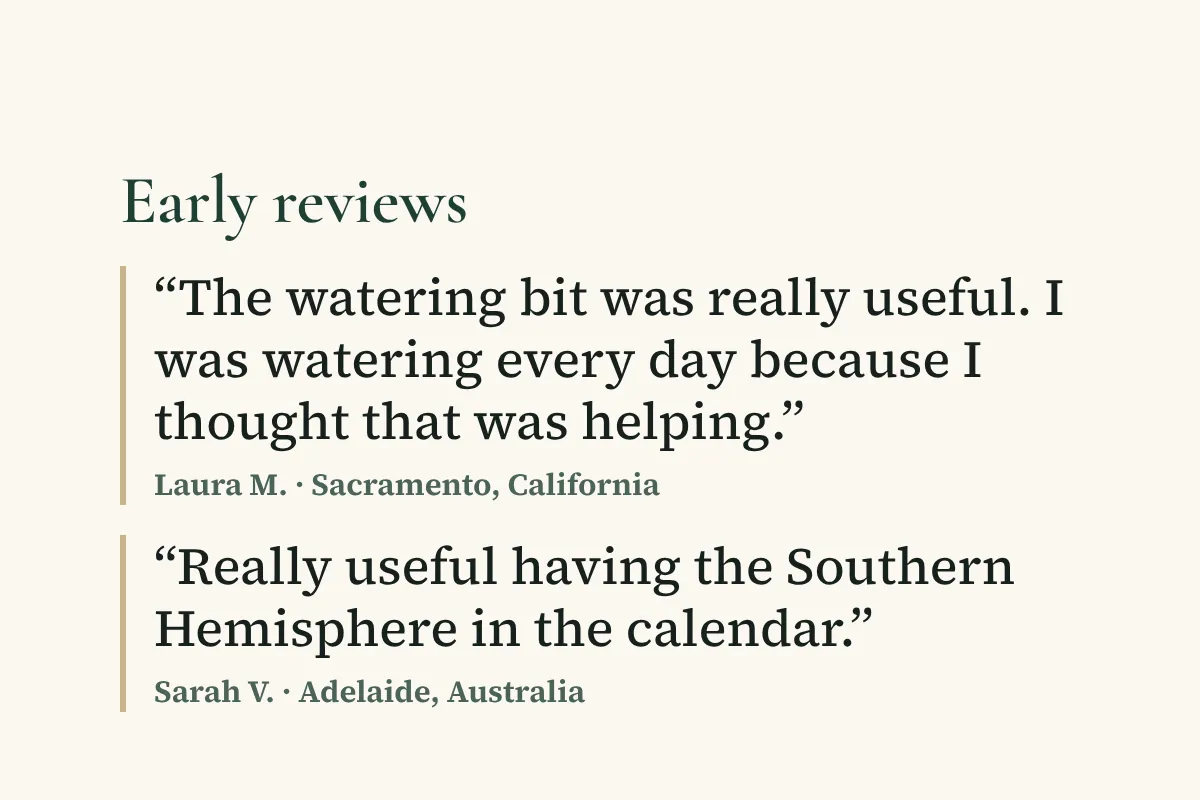
“The watering bit was really useful. I was watering every day because I thought that was helping.”
 Laura M. · Sacramento, California
“Had a cart full of tools before I even had a tree. Read that section before ordering and ended up buying a lot less. Liked knowing what each thing was for and what could wait. I’ve started enough hobbies with a huge shopping bill.”
 Susan K. · Houston, Texas
“Bought it for Dad. He sends me photos of his tree now and explains why he kept one branch and removed another. Before this he just used to say he liked bonsai.”
 Rachel T. · Tampa, Florida
“Sent the PDF to my Kindle and I’ve been reading a bit at night. Already bookmarked the bit about choosing a first tree.”
 Daniel H. · New York, New York
“I’ve only got a small balcony. The species table helped me work out what might suit it before buying something just because I liked the photo. Could’ve used that advice with a few other plants.”
 Jennifer P. · San Diego, California
“My wife had already lost one and didn’t want to buy another. The bits about light, roots and soil interested her because she’d just been following bits of advice before. We went to the nursery at the weekend with a much better idea of what we were looking for.”
 Mark W. · Dallas, Texas
“Finally understood why the potting mix matters. I’d been treating it like any other houseplant.”
 Angela R. · Orlando, Florida
“Printed the repotting pages and took them outside. Glad the preparation came first, because I was just about to pull the tree out of its pot.”
 Carol B. · Philadelphia, Pennsylvania
“I still watch videos. What I needed was some idea of what order to do things in, and the book helped with that. Had about twenty tabs open before and still didn’t know where to start.”
 Melissa J. · San Jose, California
“Thought it all started with a seed and years of waiting. The nursery-tree section changed my mind about that. Mine has a long way to go, but I’ve got something to learn on now, which was the point.”
 David C. · Austin, Texas
“Already gone back to the repotting chapter a few times. Handy book to have around.”
 Rebecca S. · Chicago, Illinois
“Got this for my mom, who has spent years saying she’s no good with plants. She called to tell me which tree she wanted to try and why. Nice that she could start making a choice without having to understand the whole book at once.”
 Patricia L. · Albany, New York
“Came for the care advice and ended up reading about why some little trees look so old. I notice trunks and branches differently now. Wasn’t expecting that from a practical guide.”
“Got the scissors out twice and put them away again. Reading the pruning section helped me understand what I was trying to do. Took the pages out to the patio and finally made a start.”
 James F. · San Antonio, Texas
“Glad I read the species section before settling on a spot in the living room.”
“Bought the book before I had a tree. I’d spent months saying I’d start and always found something else to research. Reading what to look for at the nursery helped me take that step. This is the one I brought home.”
“My husband used to watch videos and try to copy the trees. The book got him looking at his own and thinking about what he could do with that one. Got a whole explanation about wire over dinner the other night.”
“Printed the pages I needed. The rest stays on my tablet.”
 Charles K. · Vancouver, British Columbia
“Really useful having the Southern Hemisphere in the calendar. I was getting tired of finding advice and then having to swap all the months around. Saved that section to come back to.”
“Wanted something to do after work besides sitting in front of another screen. I read a bit, then go out and look at the tree. Some evenings that’s all I do. I’m enjoying learning it without feeling I have to get through everything at once.”
 BeforeAfter
You don't need a garden. You need sun and ten minutes.
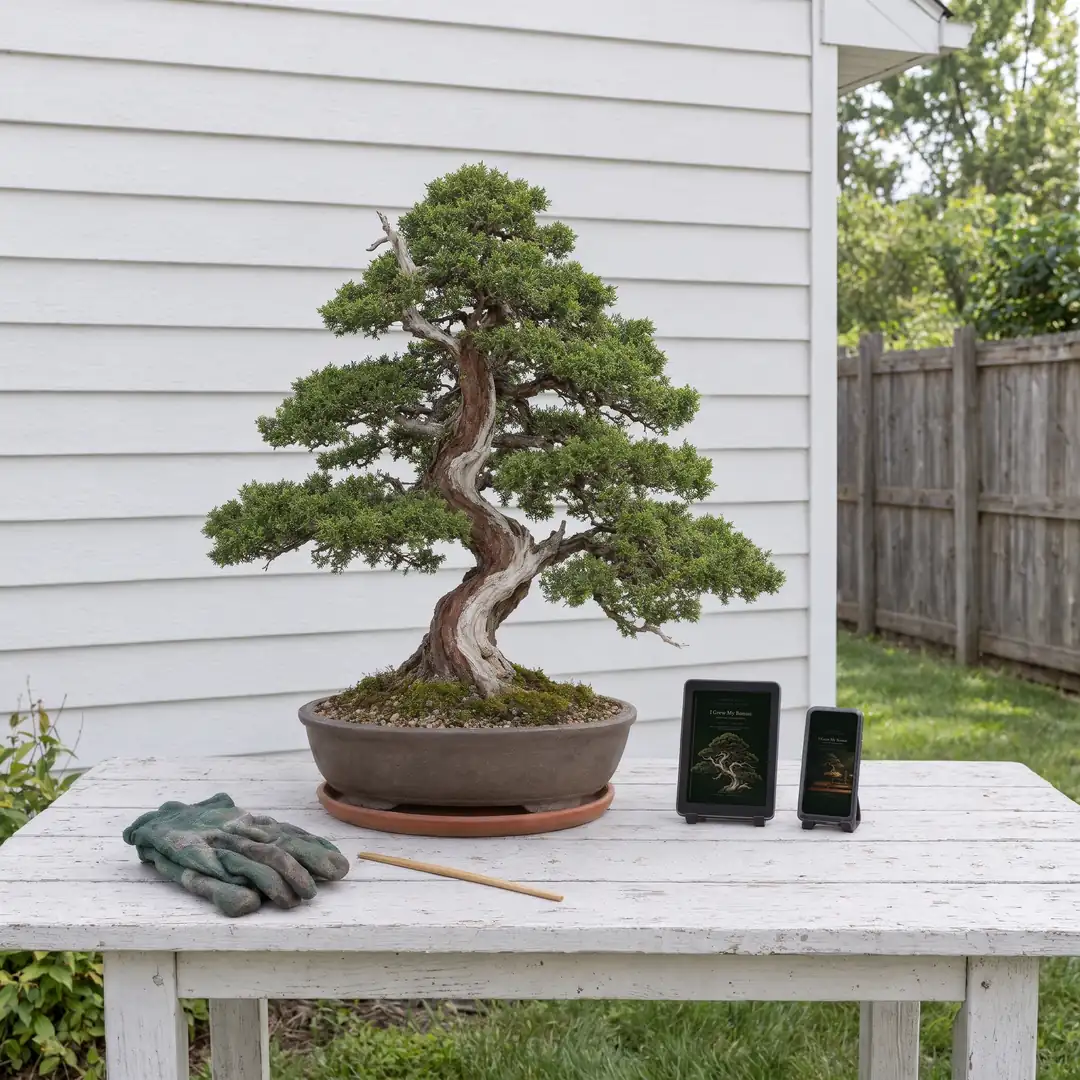
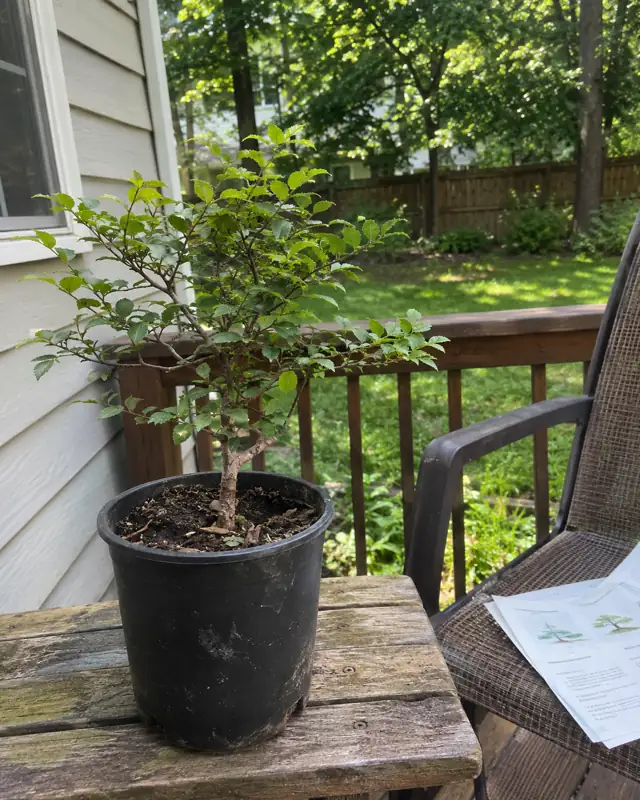
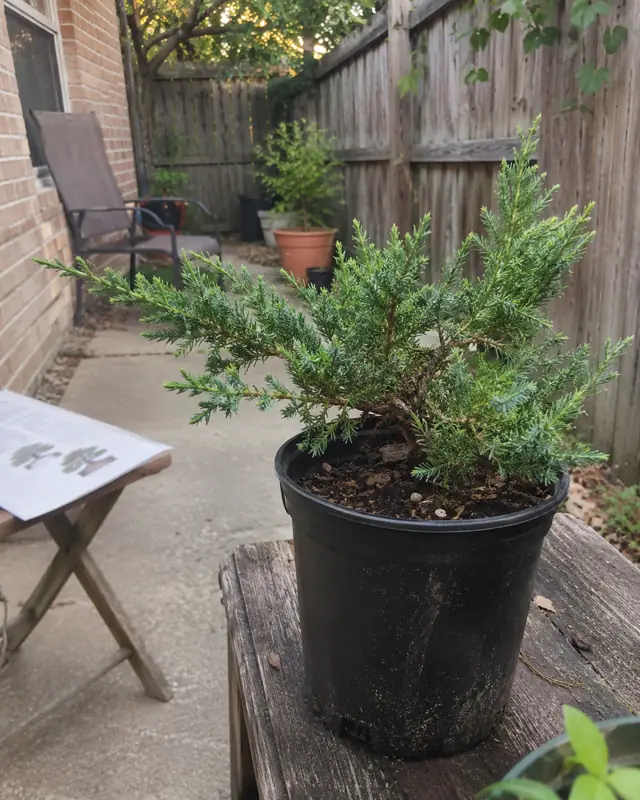
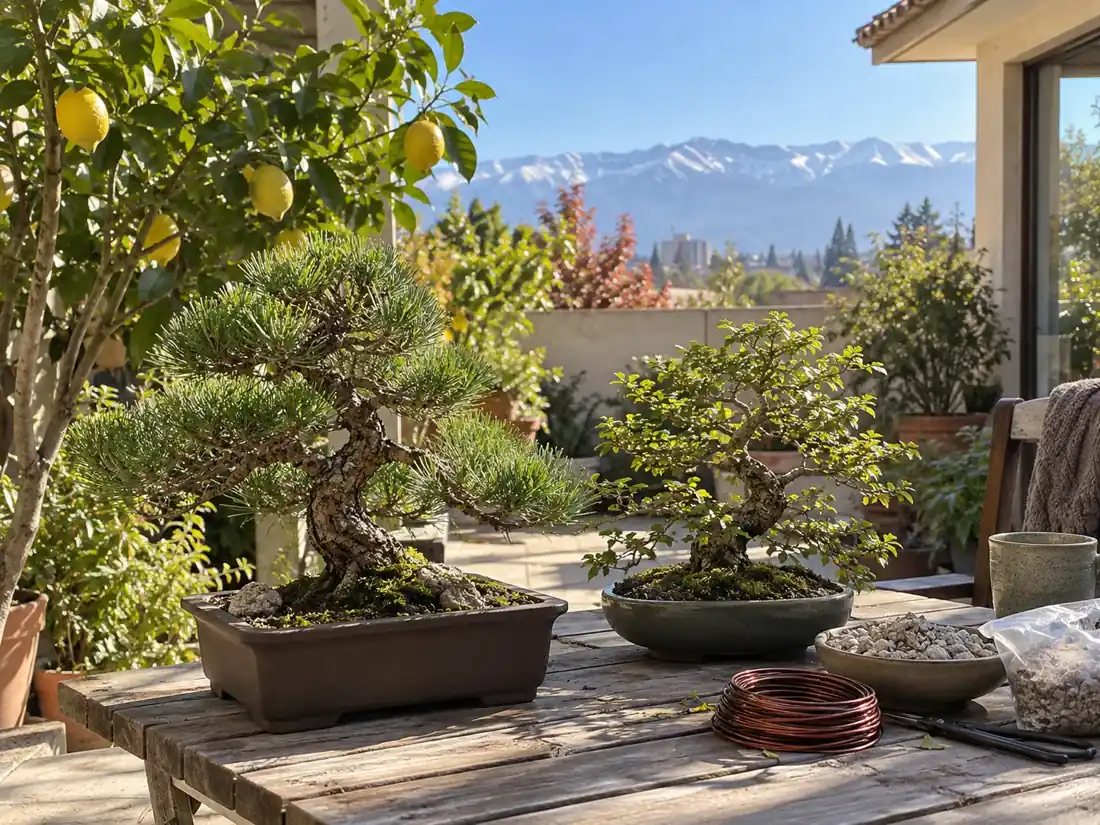
A backyard deck, a brick patio, the porch rail, a table by the back door: a spot you already walk past every day. One rule matters more than the rest: most trees sold as "indoor bonsai" aren't indoor trees. Indoors, only the ficus, and only at a bright window. Everything else lives outside. So picture it: where would yours go?
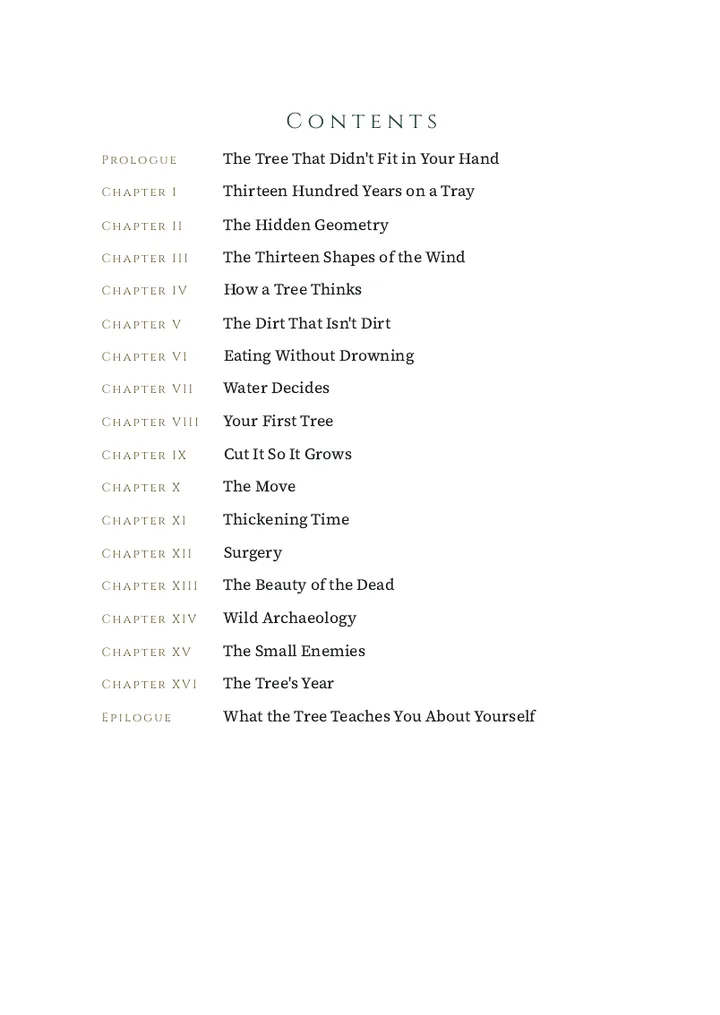
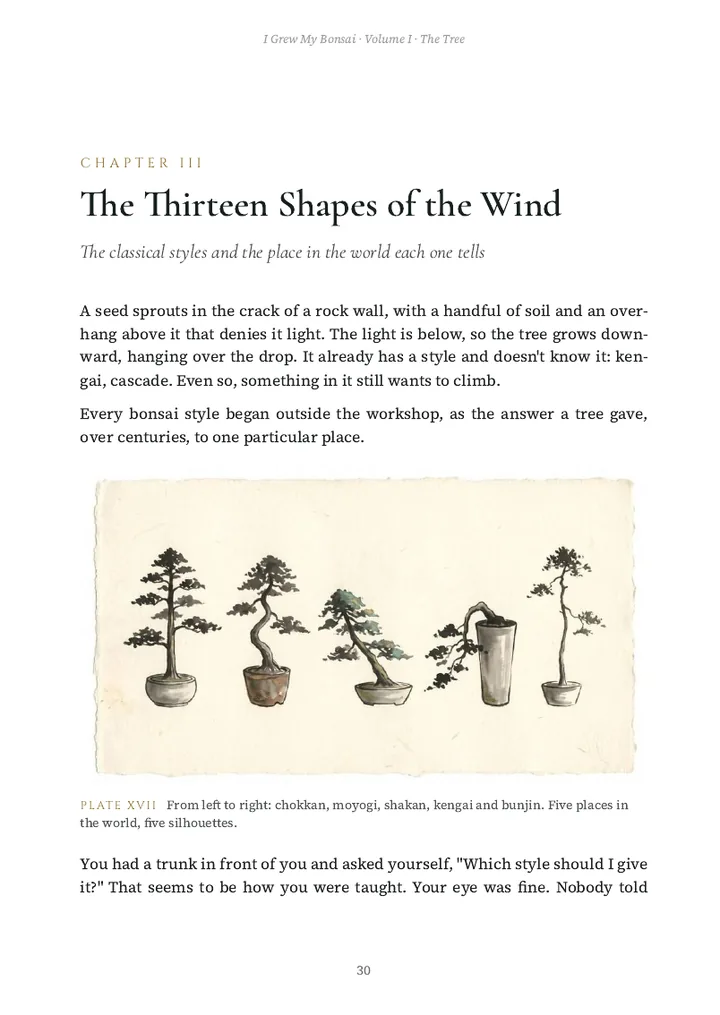
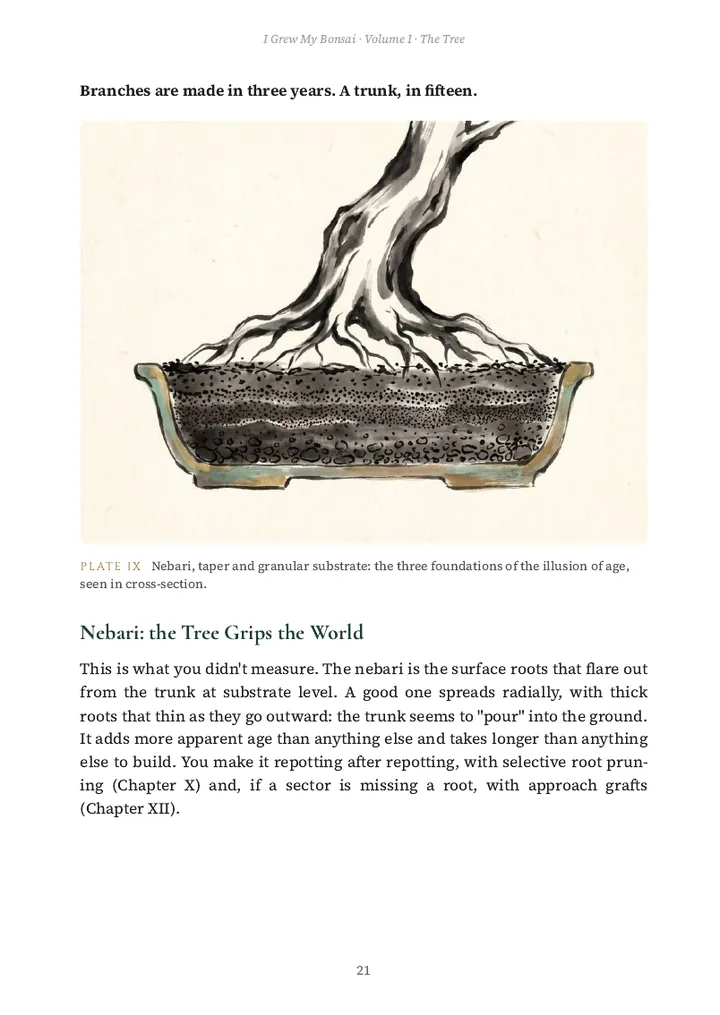
📖 Turn the real pages
Sample pages from both volumes, exactly as you'll read them.
✦ 325 pages · 2 volumes · full color, illustrated
On your own vs. the book
Where to start
Why it's dying
Your calendar
What it costs
When you're stuck
Selling a tree

What killed your last bonsai has a name.
Four names, actually. Watering every day because it "looked dry." A pot with no drainage hole. A dark corner. Fertilizer "to help it along." Then you blamed your thumb, went looking for answers, and found twenty forums that disagree.
Nobody has a green thumb. Some people have the information. This book gives you one method, in order, with the why behind every step and the calendar for your hemisphere. No more guessing which forum is right.
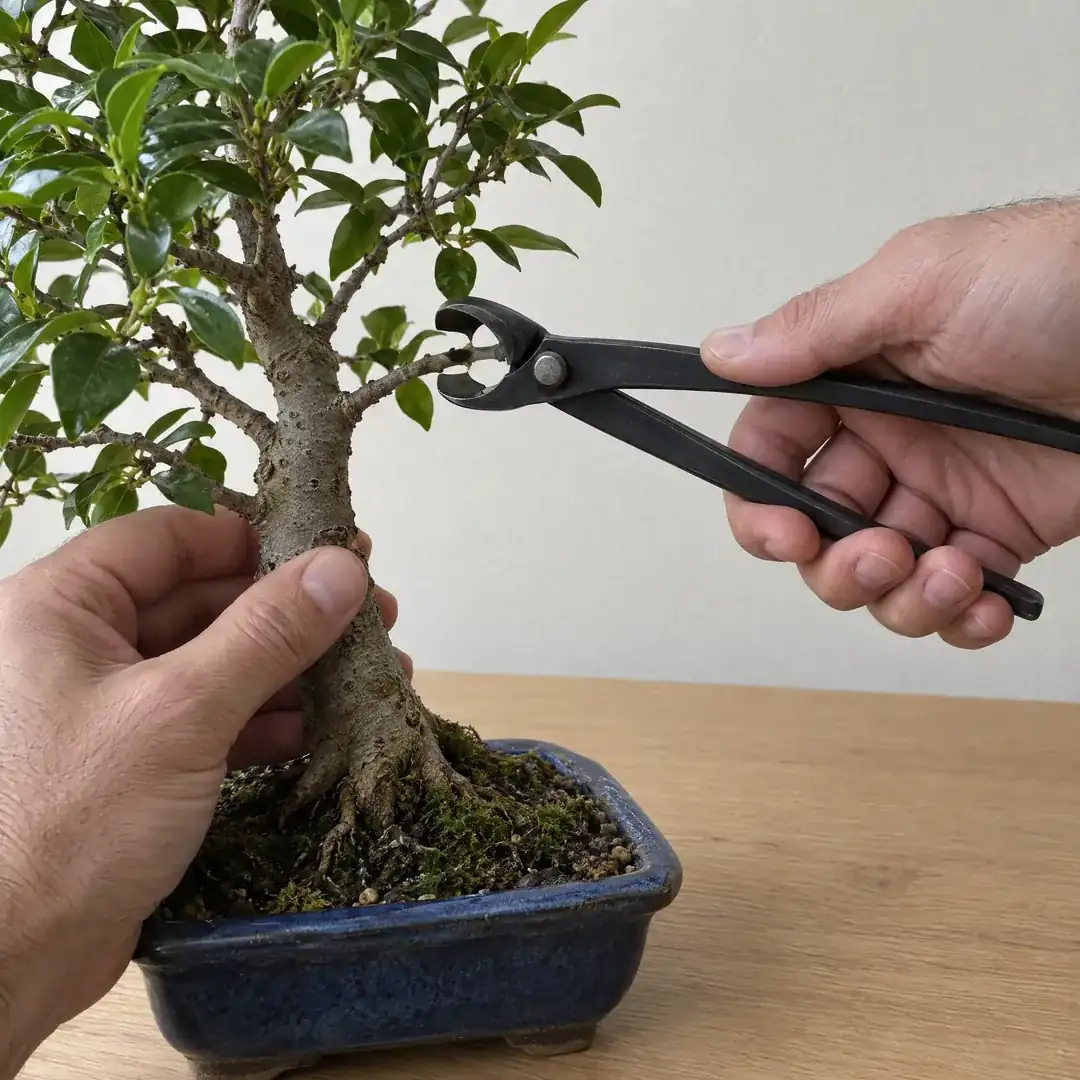
The difference between a tree that survives and one that ages well is a handful of decisions almost nobody explains.
Your tree, your six tools and your sunny spot.
That's all. You'll walk into the garden center knowing which tree to pick, and walk out without the things you don't need.
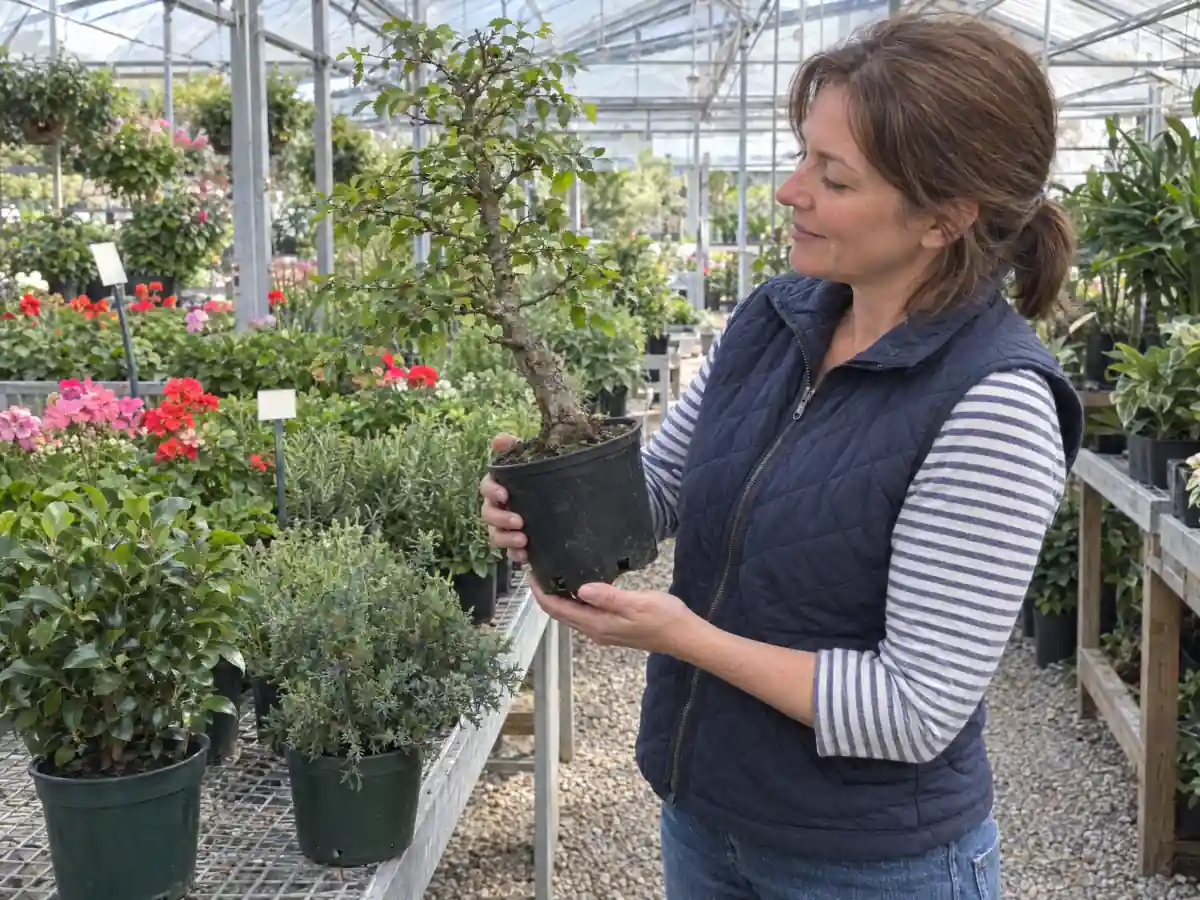
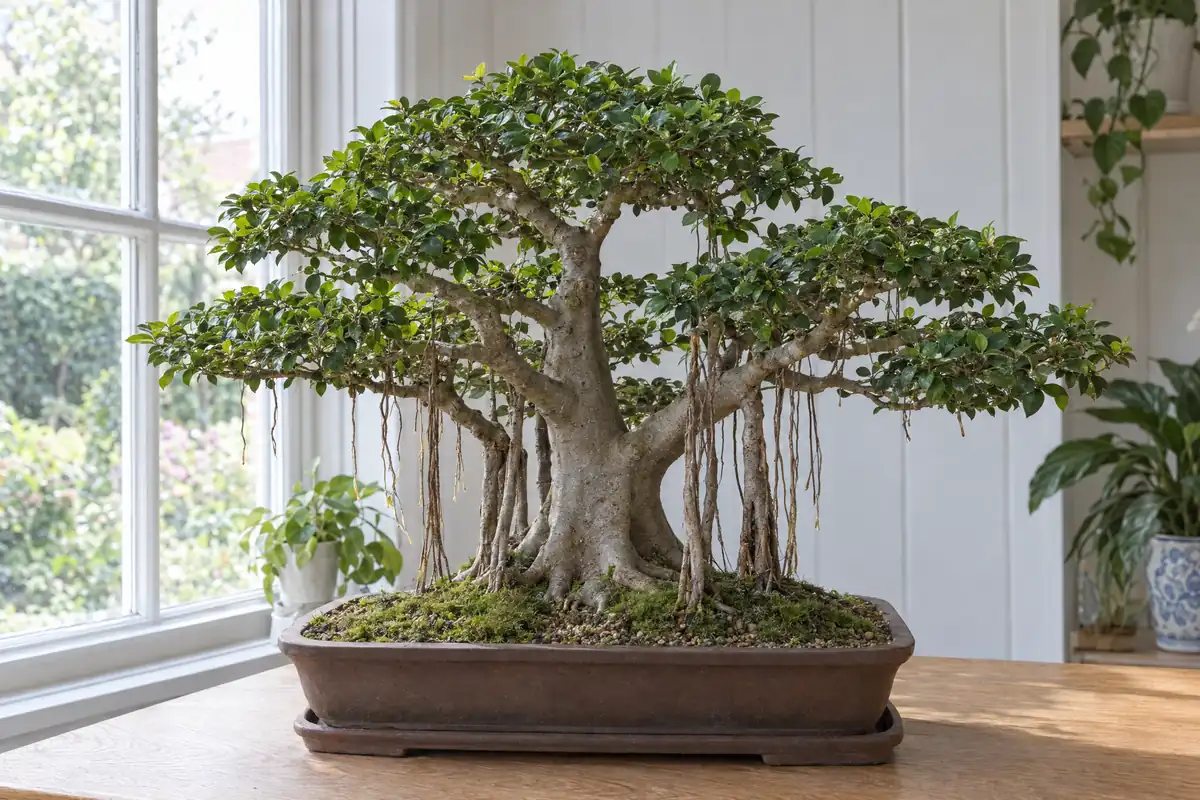
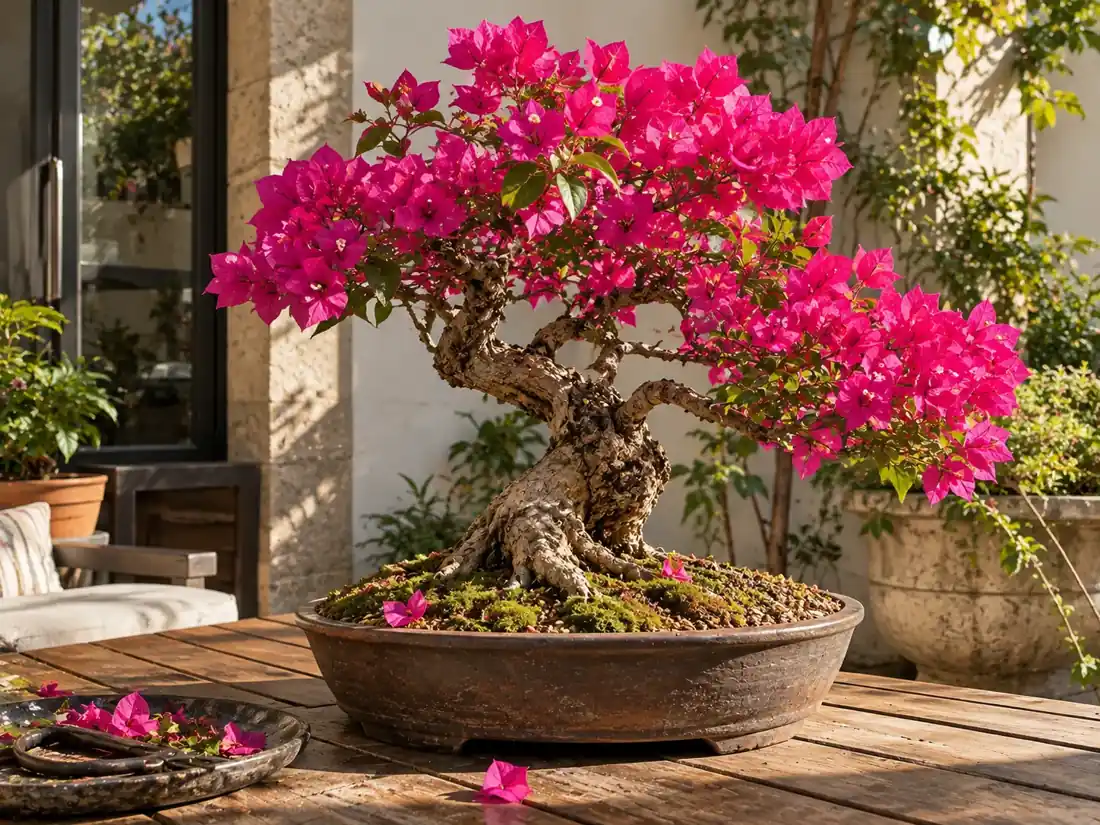
You walk past the regular plants at an ordinary garden center and spot the one with a trunk hiding under the leaves. Often it's the scruffy shrub nobody picks. A ficus, Chinese elm, juniper or bougainvillea: the forgiving kind, so your first mistakes don't cost you the tree.
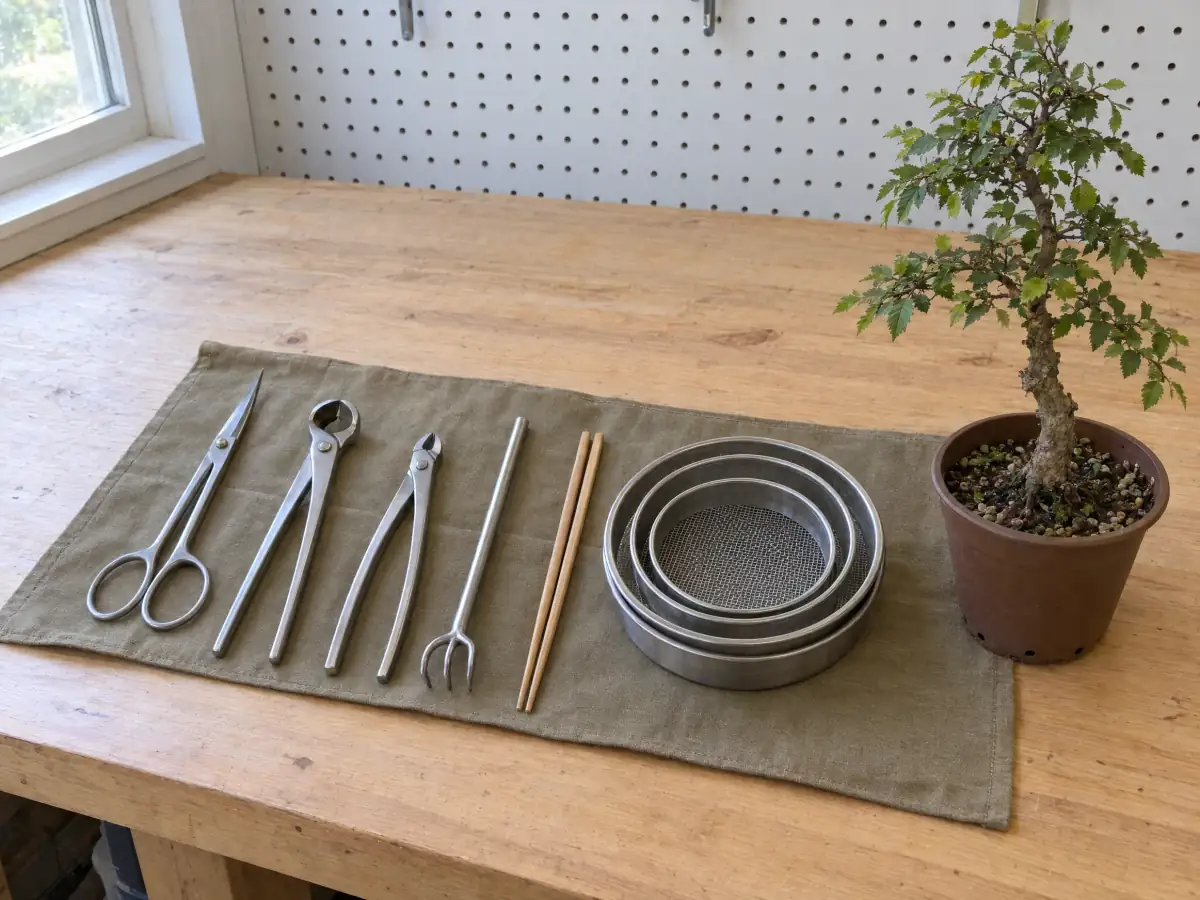
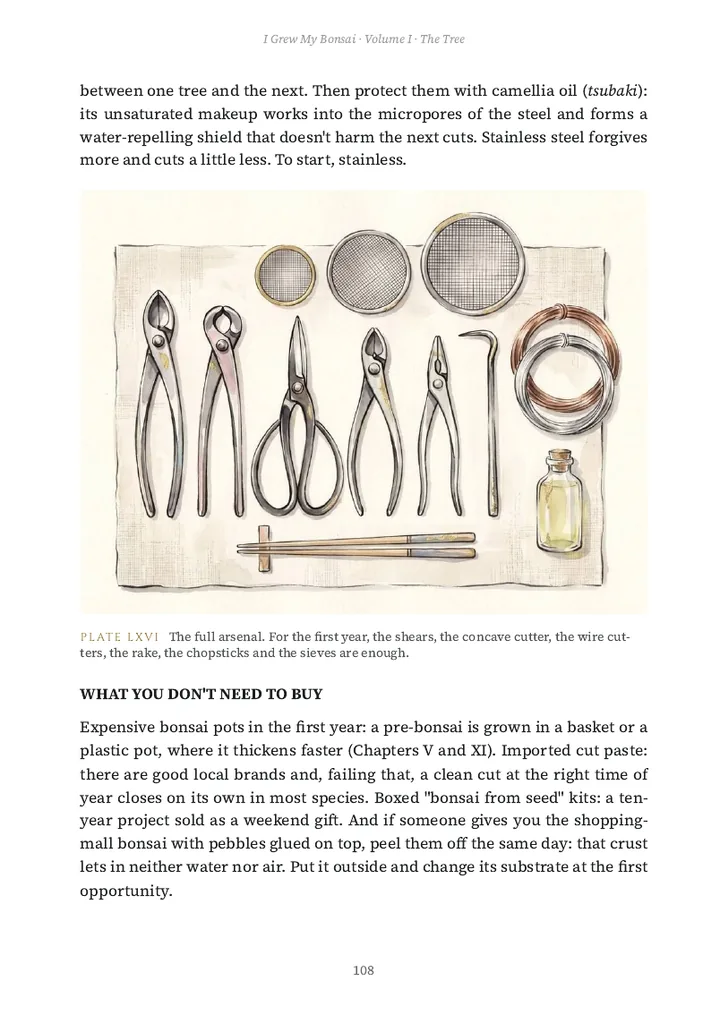
A bonsai shop sells forty. You start with six that fit on one cloth: shears, a concave cutter, wire cutters, a root rake, chopsticks and soil sieves. Stainless steel, forgiving while you learn. The rest can wait.
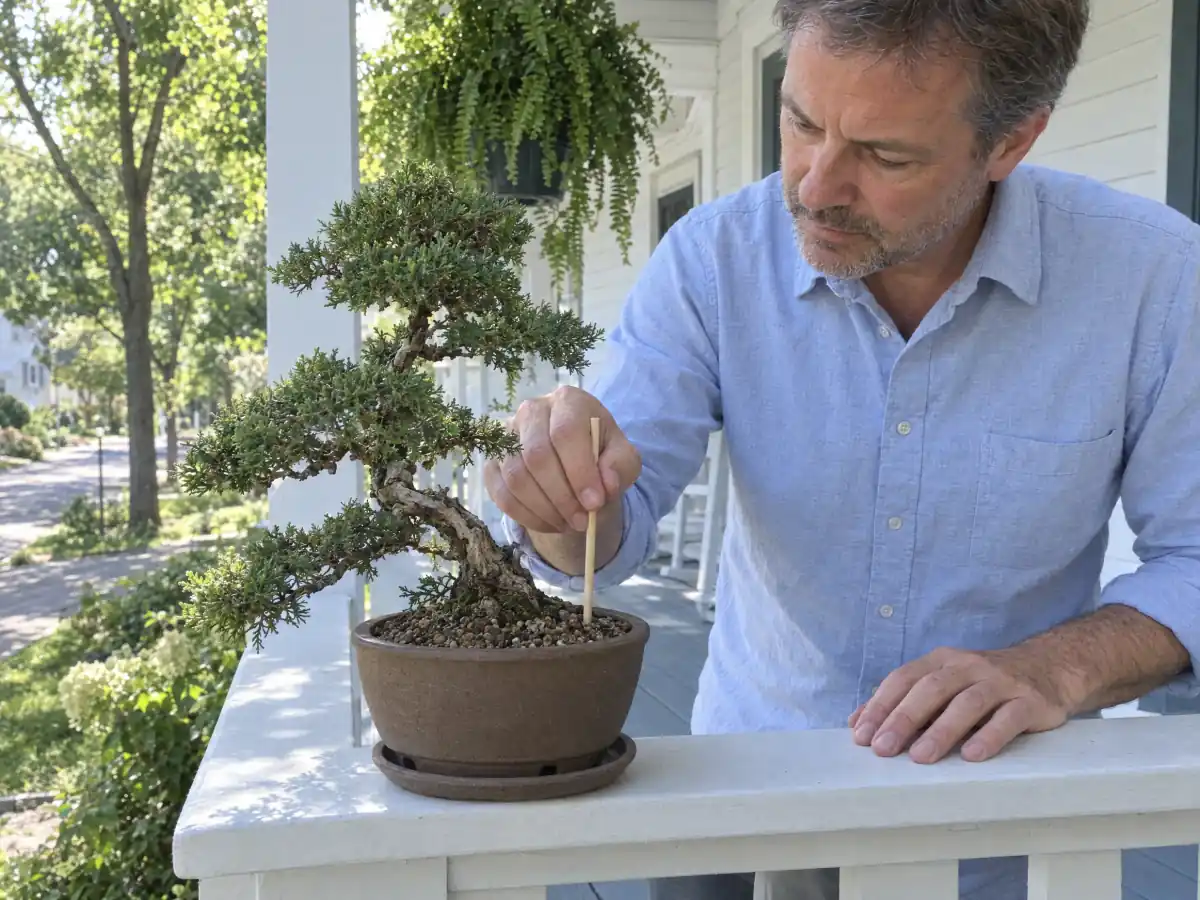
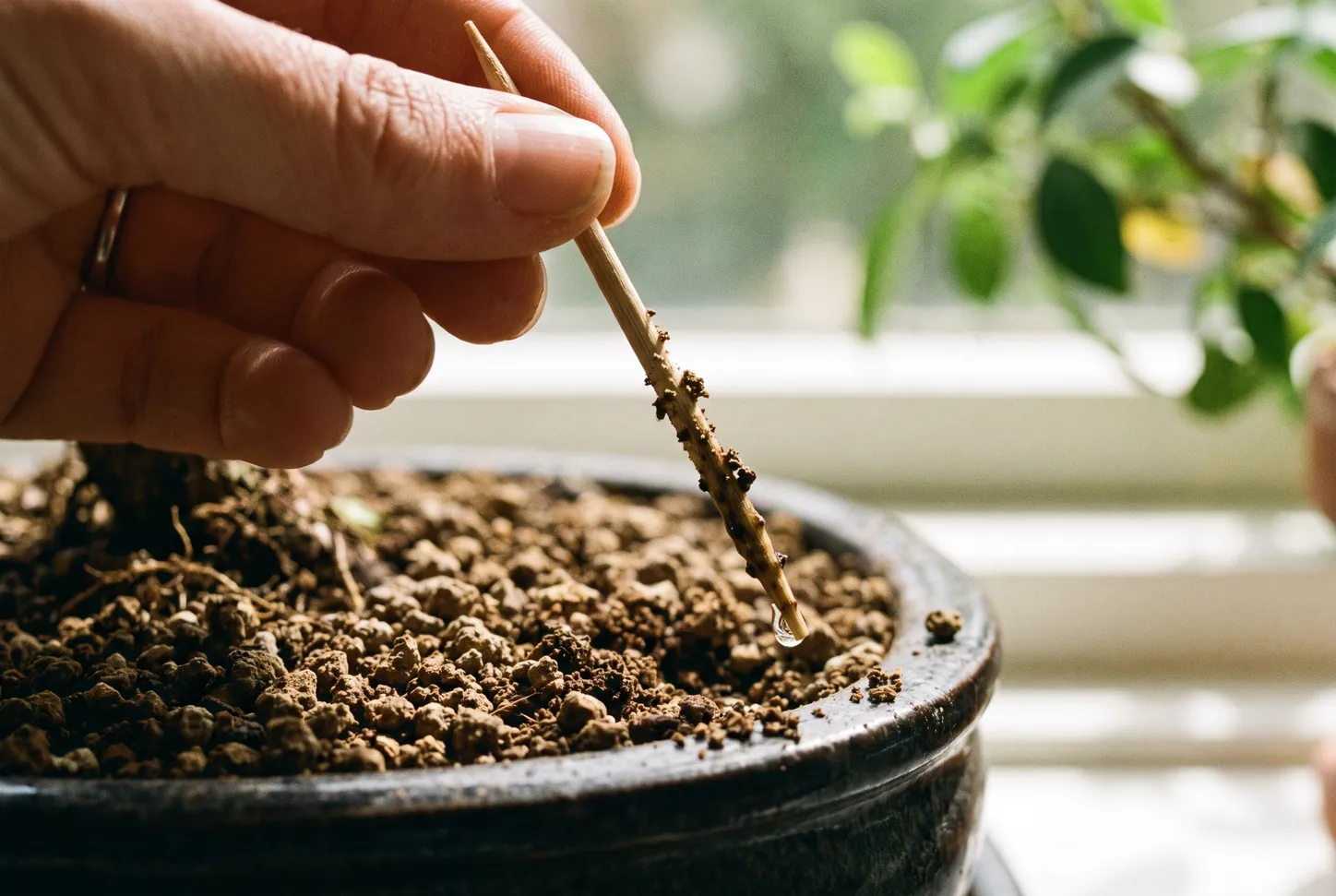
A balcony, a patio, a backyard or a sunny shelf you already pass every day. Indoors, only the ficus, by a window. Your ten minutes: a chopstick in the soil, a look at the leaves, and you know how it's doing.
Expensive bonsai pots in the first year: a young tree grows on in a plastic pot. "Grow your own bonsai" seed kits: a ten-year project sold as a weekend gift. And the mall "bonsai" with rocks glued on top: if someone gives you one, peel them off the same day and put it outside.
You can learn it from free videos. It just takes longer, and costs a tree.
The information is out there, in pieces, in the wrong order, for someone else's climate. We did the searching, checked it, and put it in the order your tree needs.
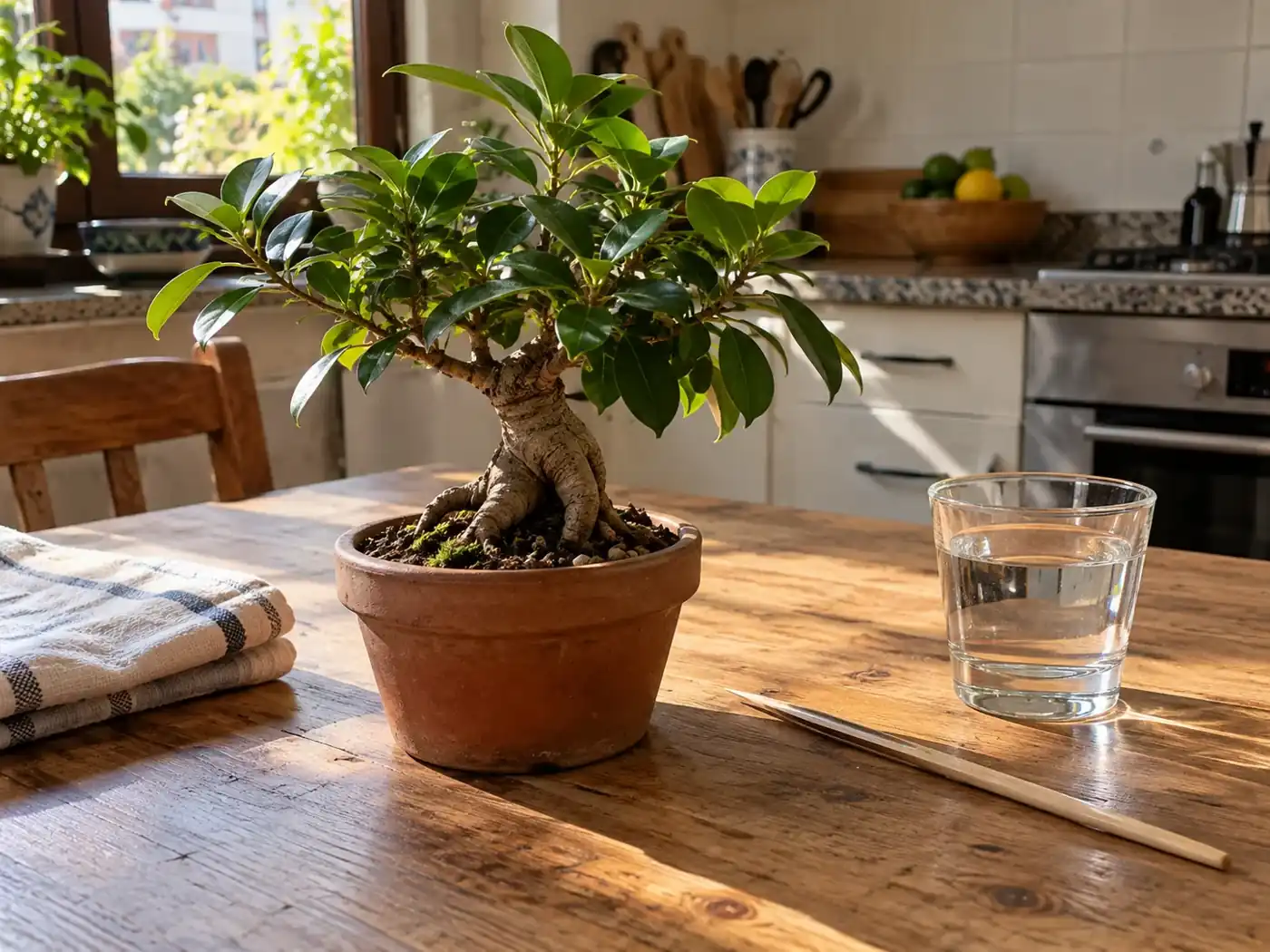
One tree changes your day. Ten years of trees change your life.
Ten minutes a day with something alive that depends on you. What you get back is the rest of the day.
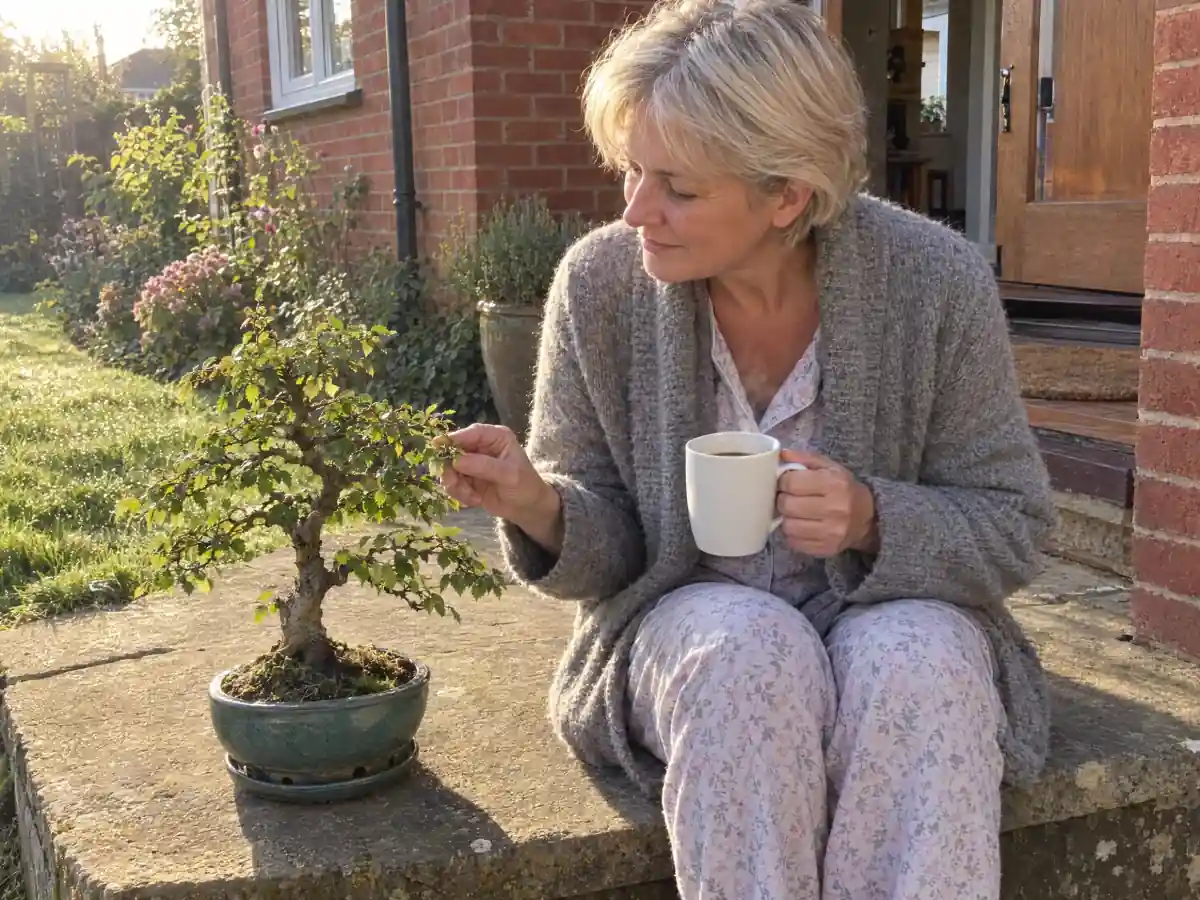
Before you look at your phone, you look at your tree. A chopstick in the soil, a glance at the leaves, and you know how it woke up. The first thing in your day that asks for nothing back.
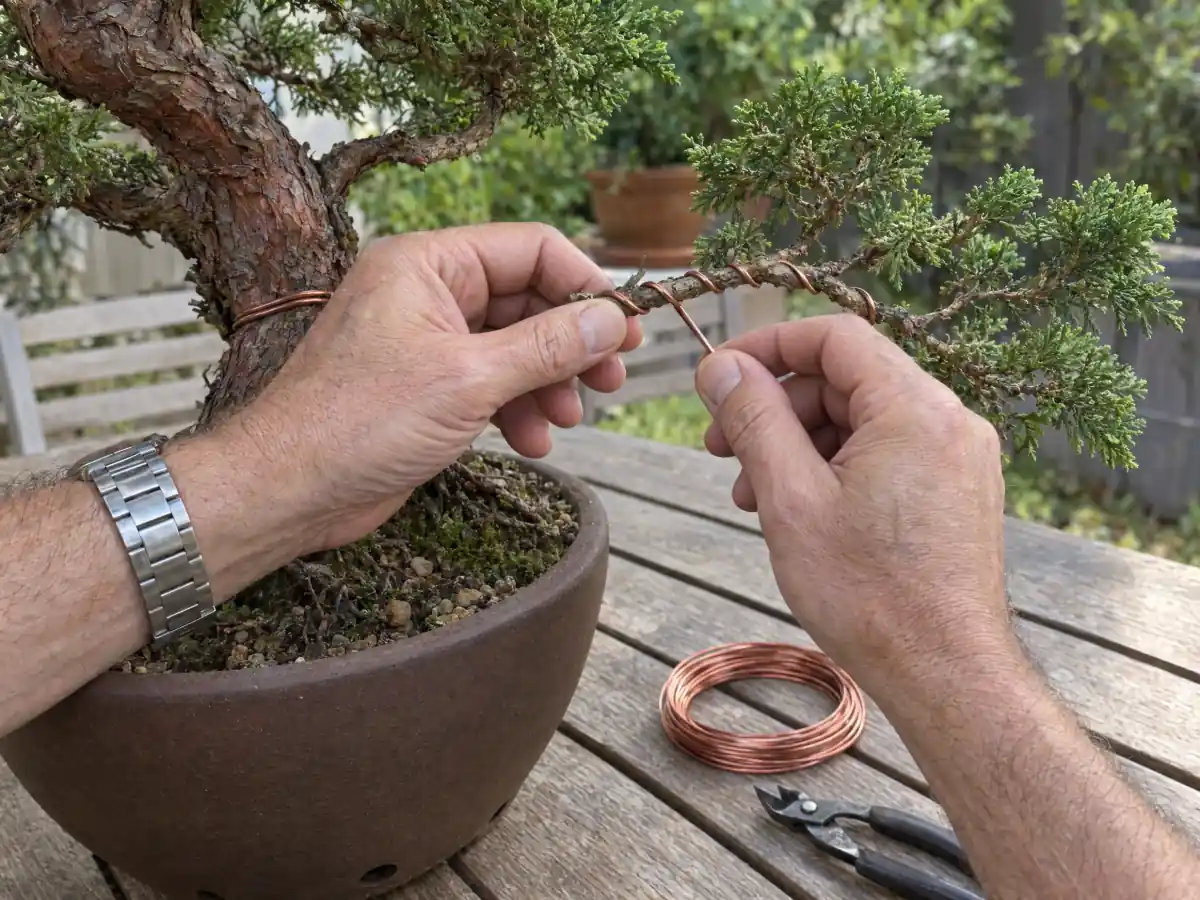
You wire a branch, prune with a reason, repot when winter ends. Your hands learn something real, and you feel it in a week that's mostly screens.
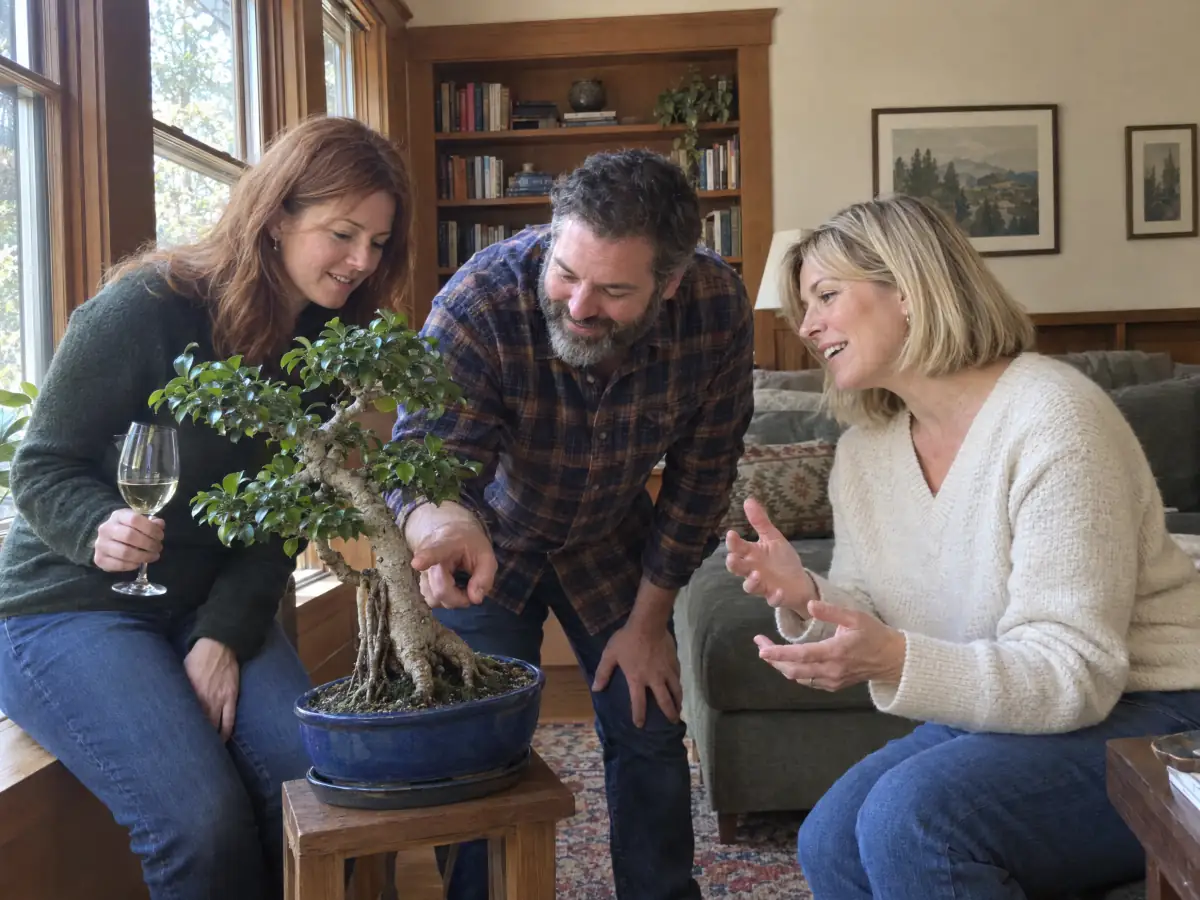
A corner that said nothing is now the first thing your guests ask about. No garden needed: a sunny balcony, a patio, a table by the back door.
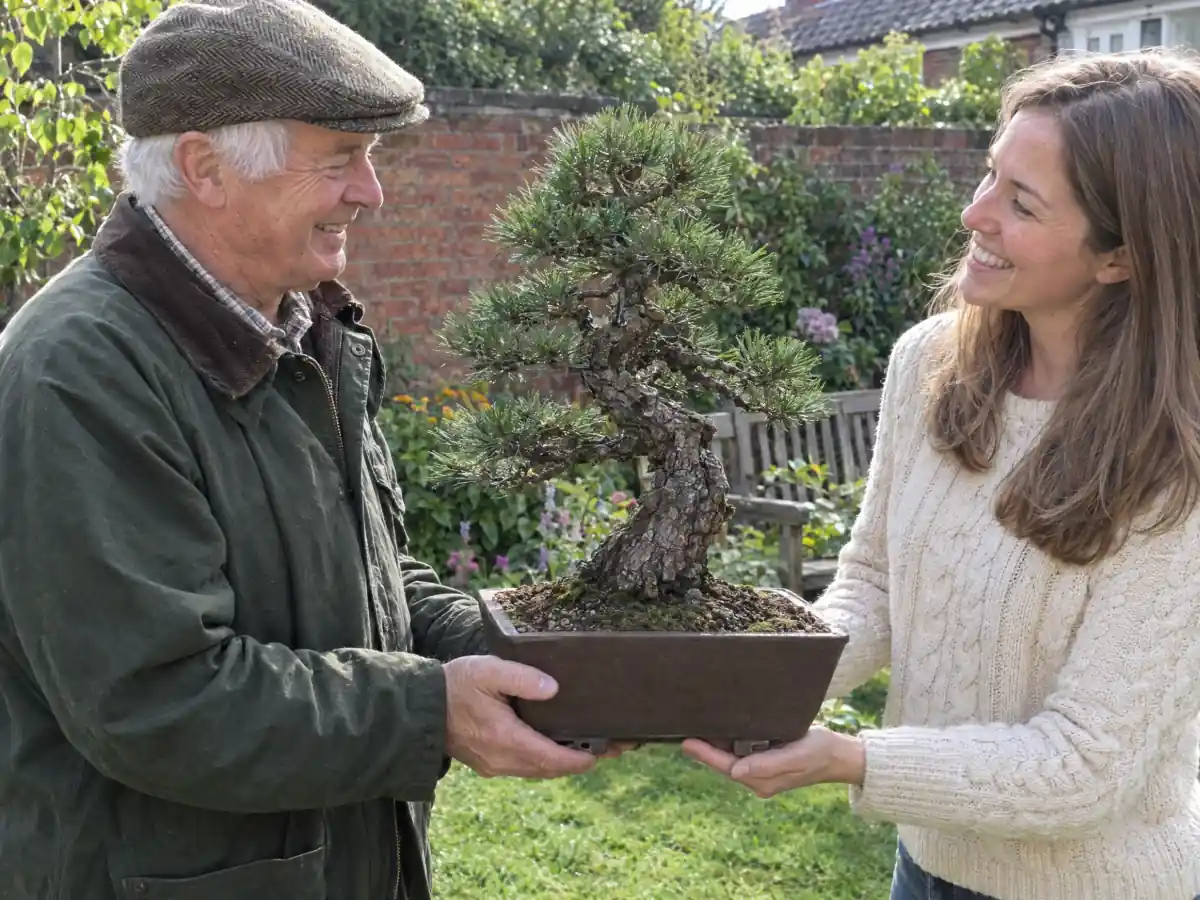
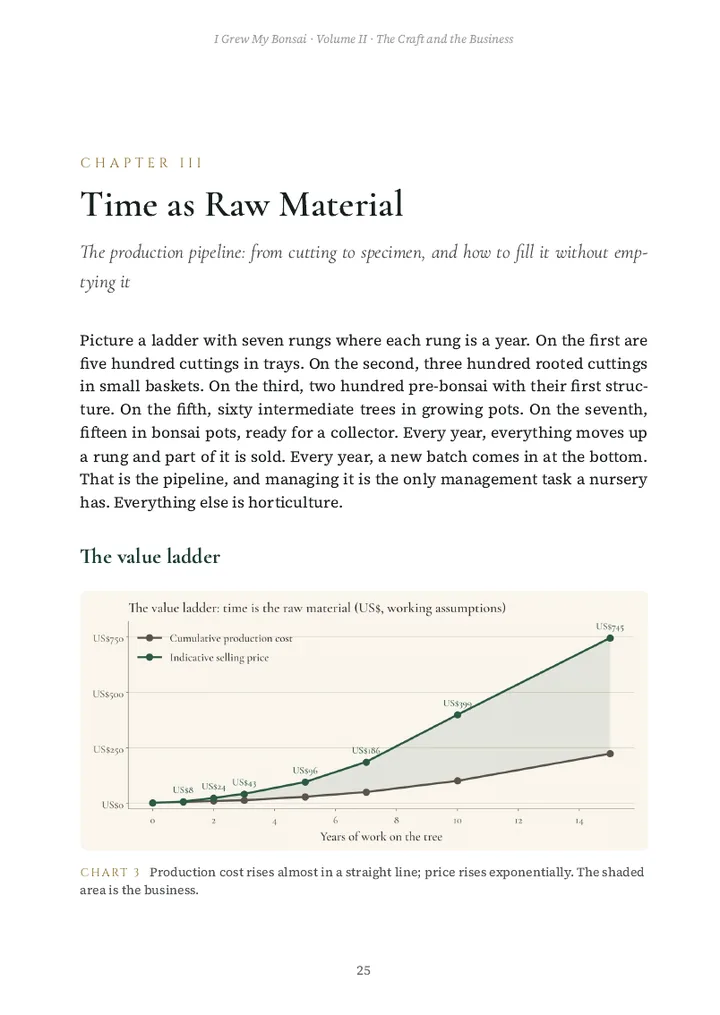
A cutting that costs about what a coffee does can gain value with years of your care. Twenty years on, someone asks if they can have it one day. Almost nothing you buy works that way.
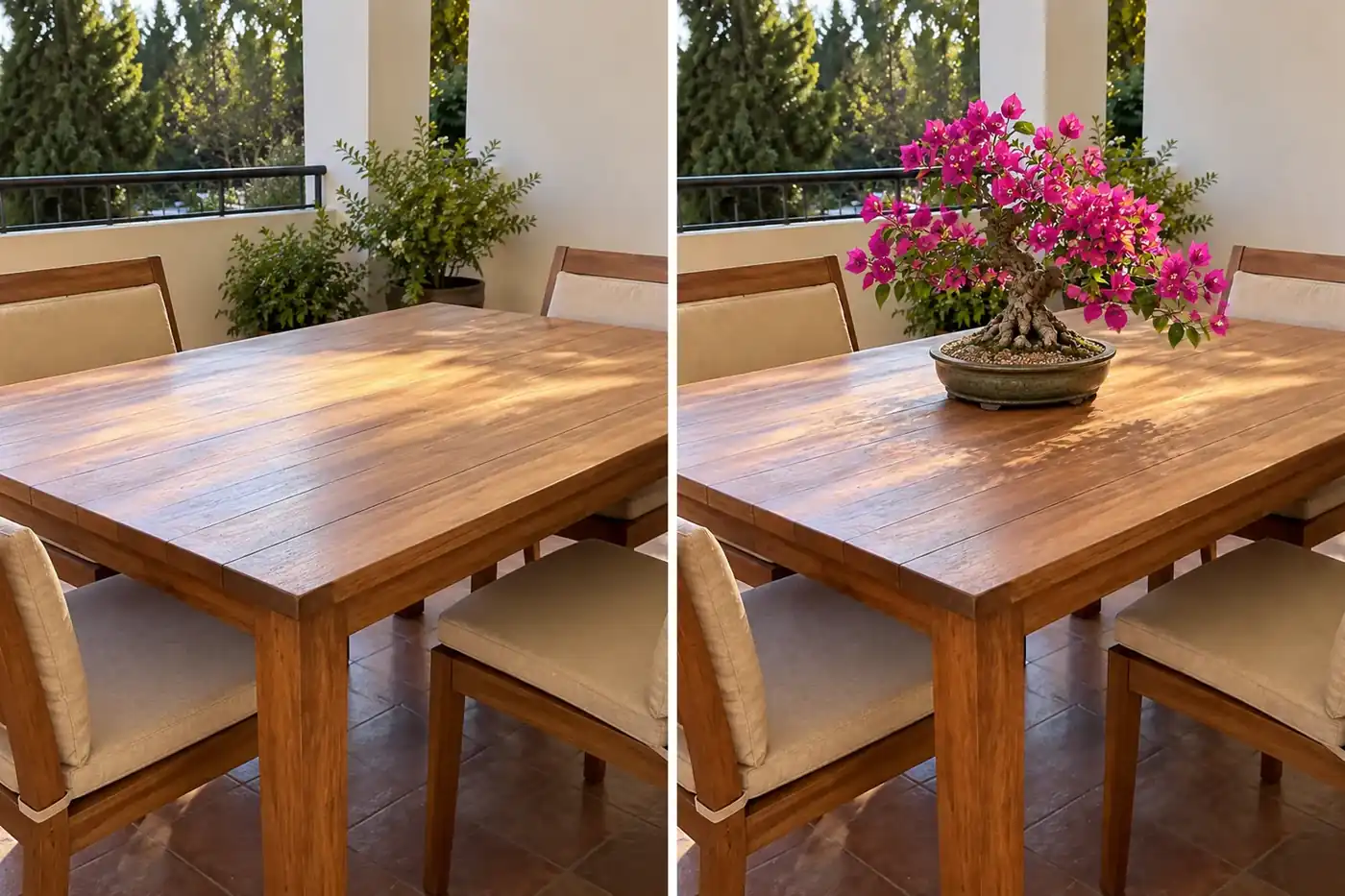 BeforeAfter
From the first tree you keep alive to the one people ask about.
First you keep a tree alive. Then you start shaping it, and you know why each cut goes where it goes. One day someone asks what it costs, and you have an answer. Every technique comes with its why, because a technique without its why is a superstition.
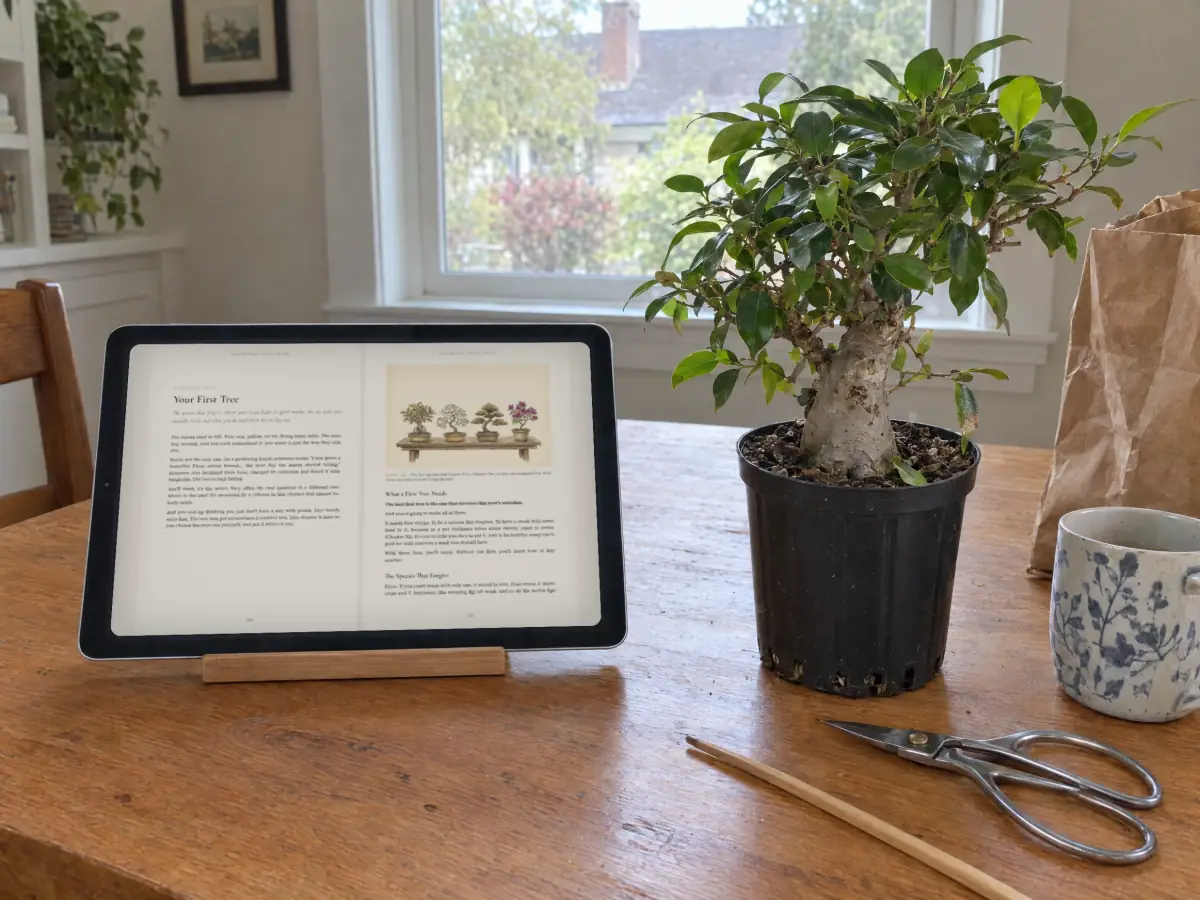
You pick the right species, buy only the six tools you need, and know what to do on day one.
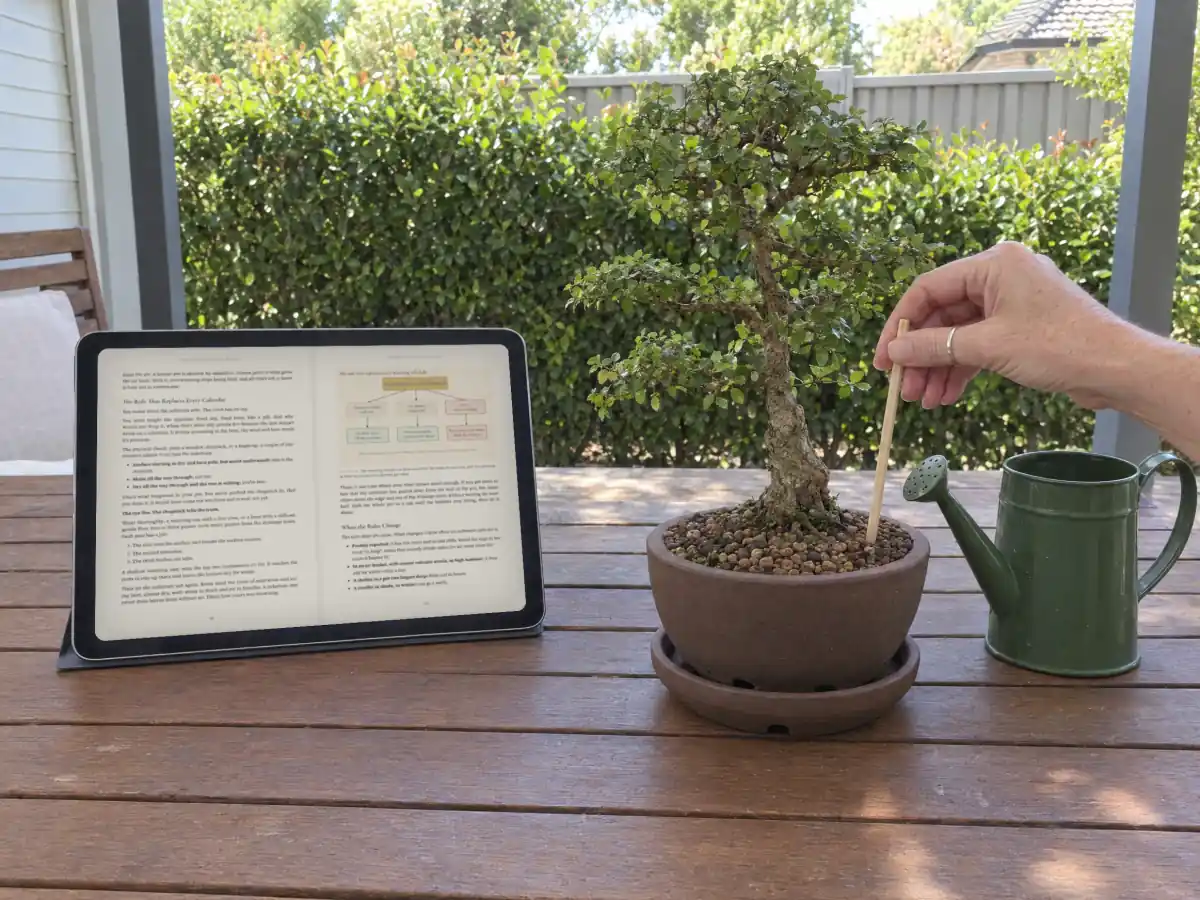
You stop drowning it or drying it out, and you know exactly where it goes in your home.
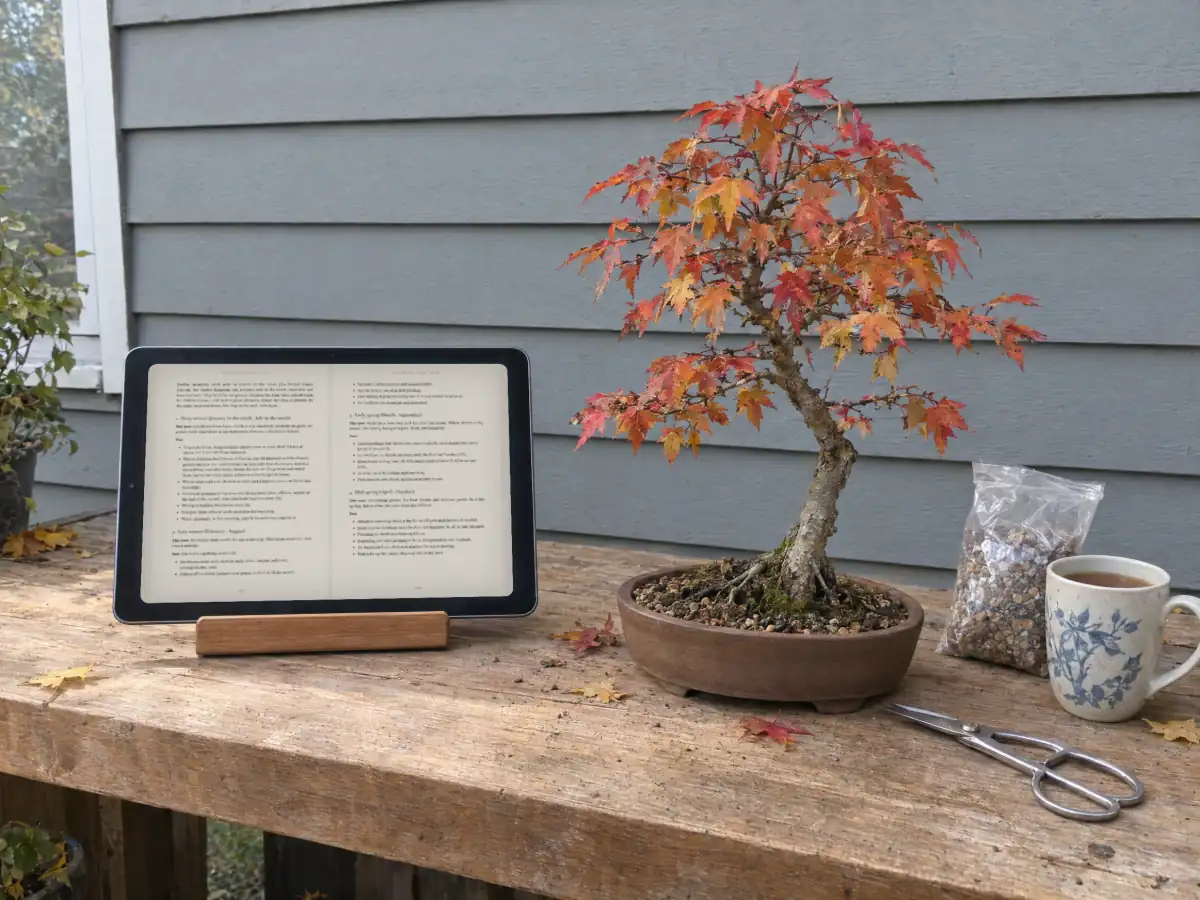
Each month you know the job in your climate, with the tree in front of you. Nothing to memorize.
With those three, your first tree gets through its first year. The rest is for your second tree, and your tenth: the one someone will want to buy.
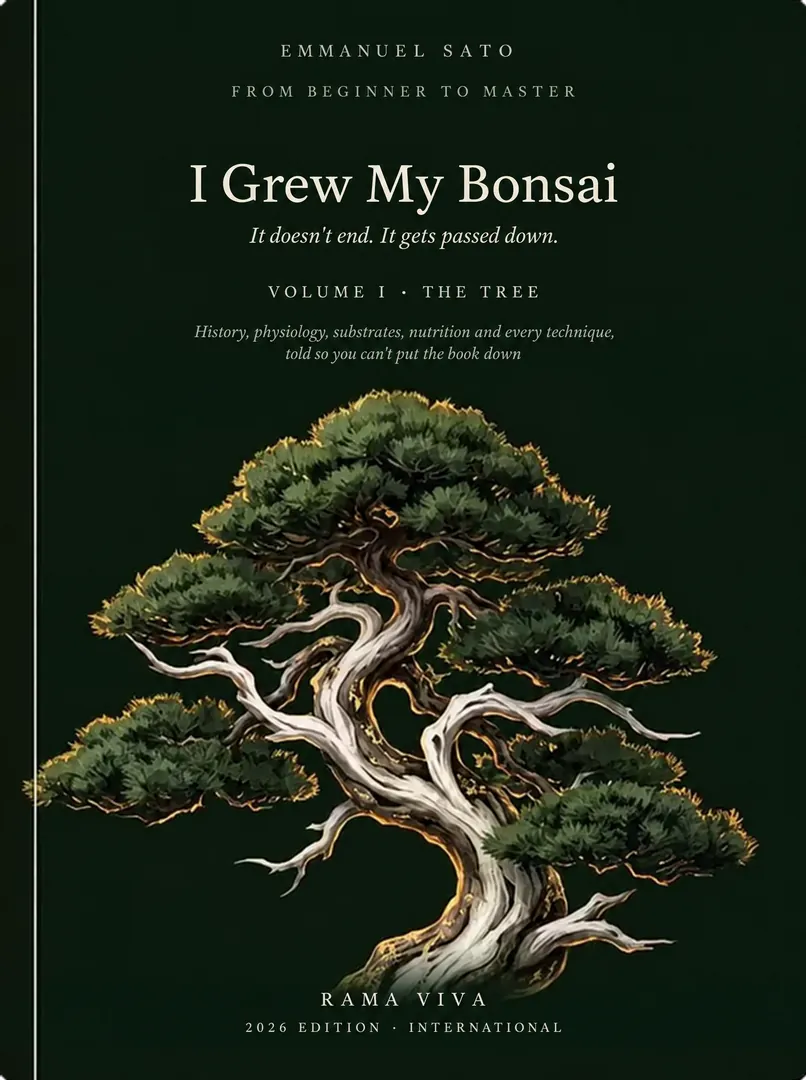
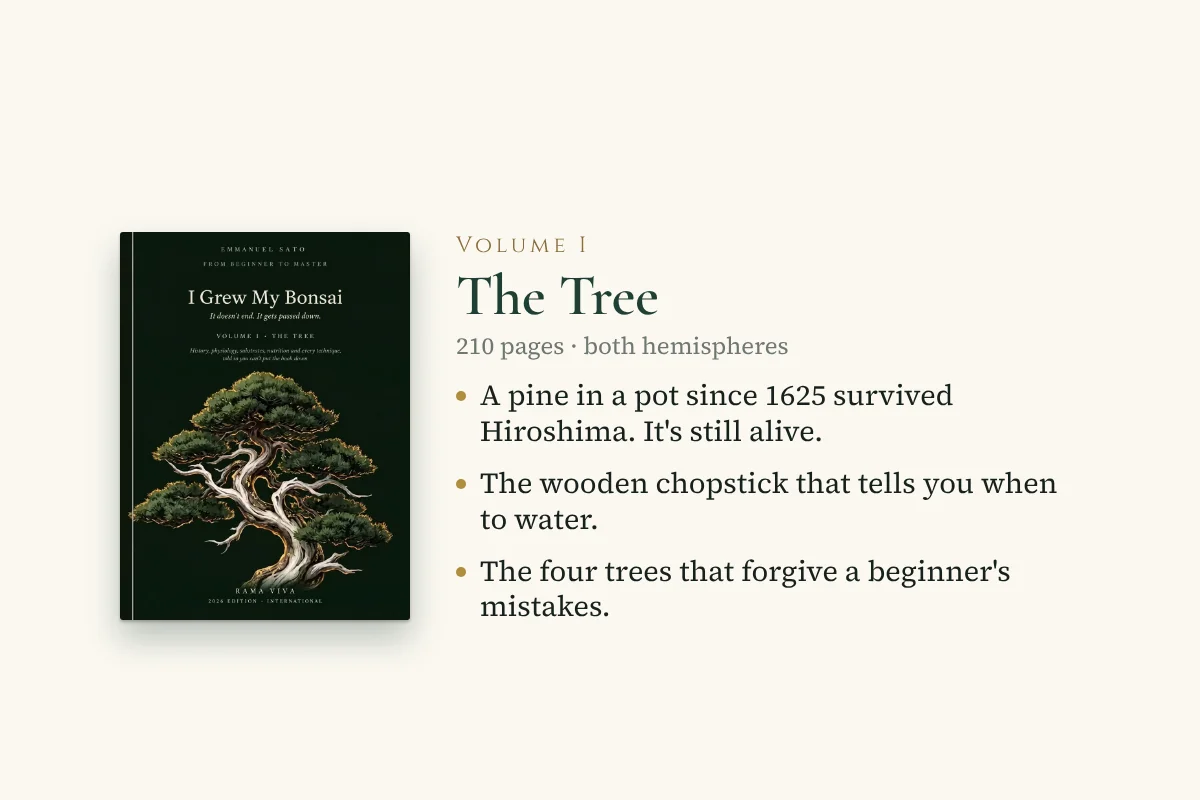
The Tree
You keep it alive, then you shape it.
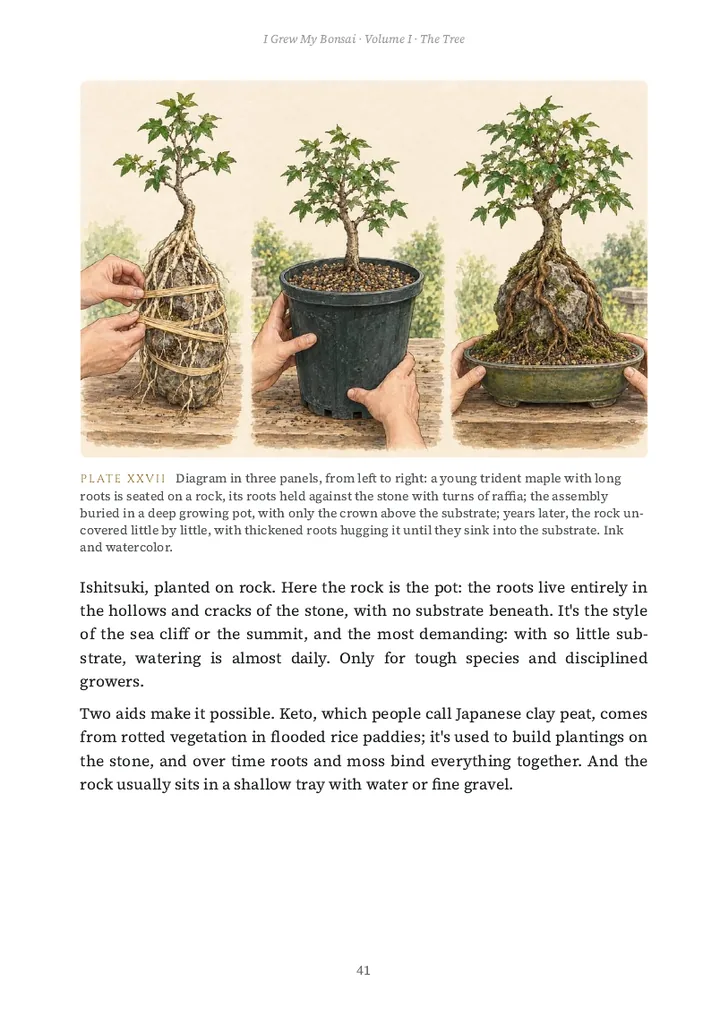
- Pick a first tree that forgives mistakes, and spot a good trunk at an ordinary garden center
- Water with a chopstick, not a schedule, give it the right light, and mix the right soil for your species
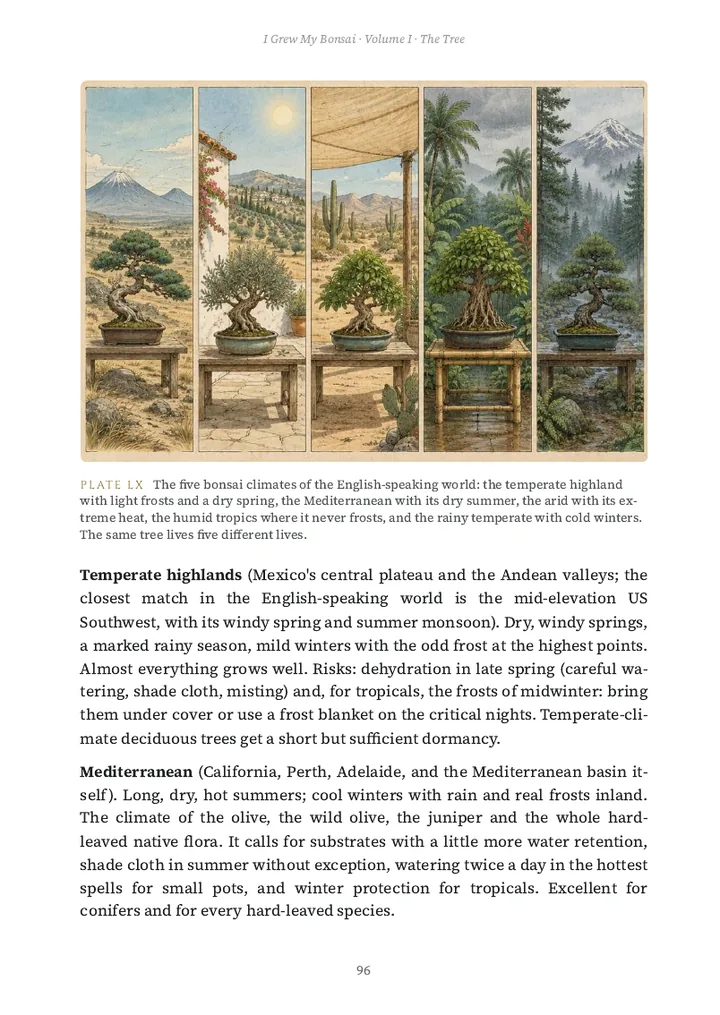
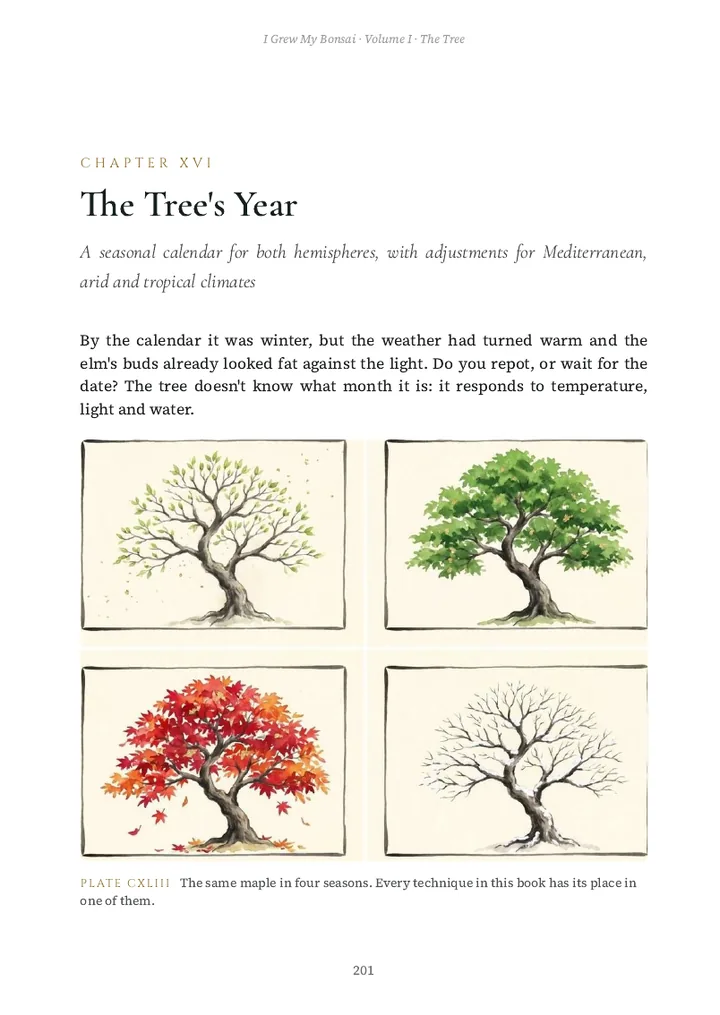
- Know each month's job, with the months for both hemispheres
- Tell what's wrong when leaves yellow or spots appear, with a diagnosis table for pests and fungi
- Prune, pinch, defoliate, decandle, and wire with aluminum and copper
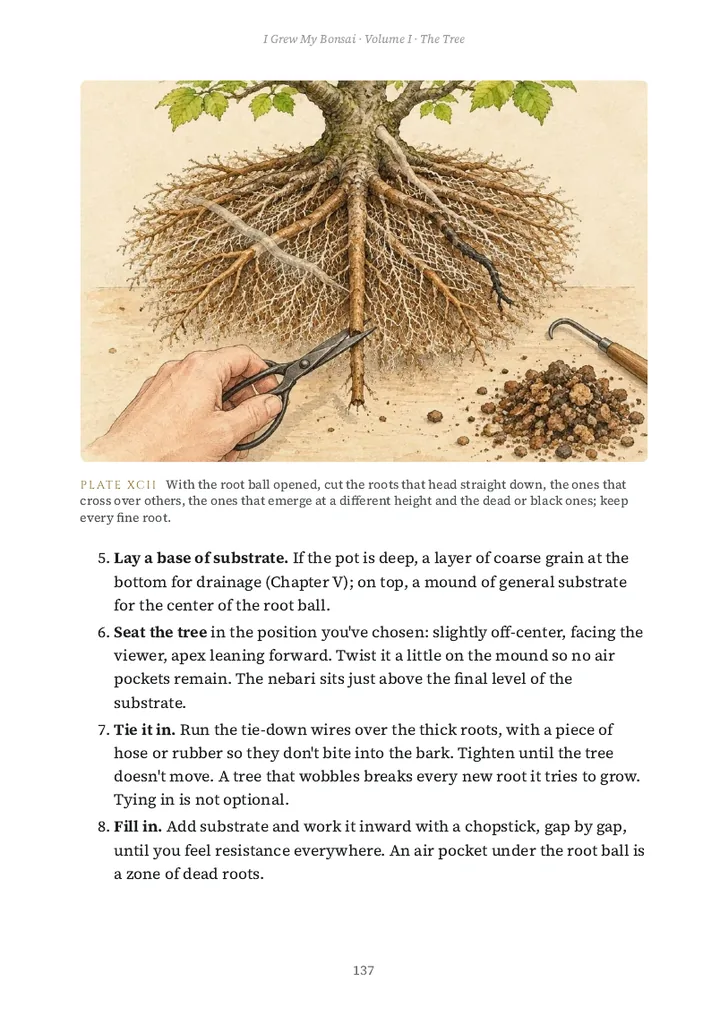
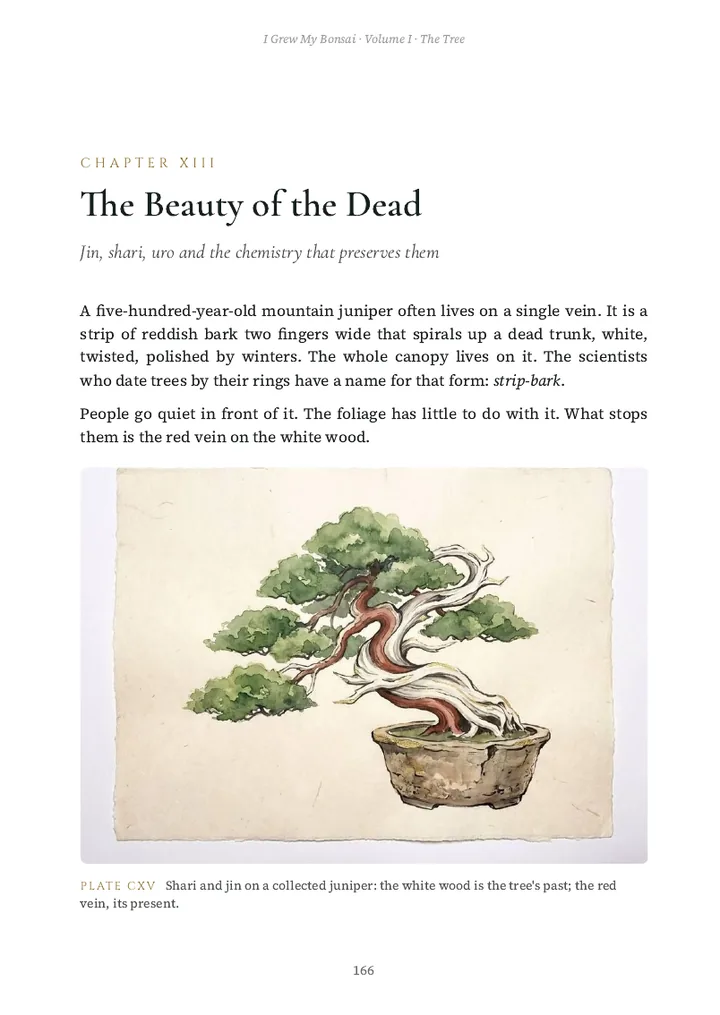
- Repot in 9 steps, and try grafts, air layering, cuttings, jin and shari
- See what makes a tree look old: the thirteen styles, thirds, taper and nebari, with numbers
- Feed it right: the 17 elements, a deficiency table, mycorrhizae and a feeding calendar
- Understand how a tree thinks: where it decides to bud, and how wounds close
- Learn why bonsai wasn't born in Japan, and what wabi-sabi really means

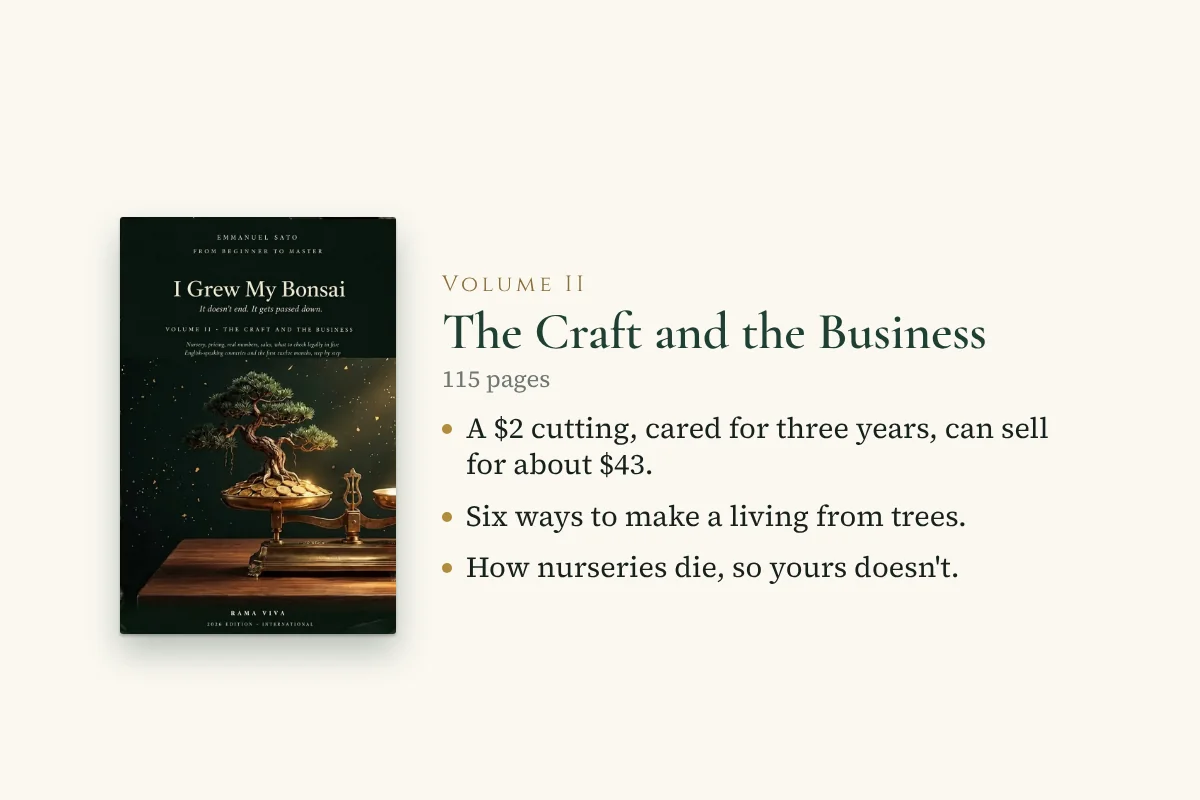
The Craft and the Business
For the day someone asks what your tree costs.
- See the market nobody looks at, with figures and their sources
- Know the four kinds of buyer, and what each one pays for
- Weigh six ways to make a living from trees, and how they feed each other
- Work out what a tree costs you: unit cost, price and margin for each product and service
- Plan with three starting budgets and a 36-month projection with its break-even point
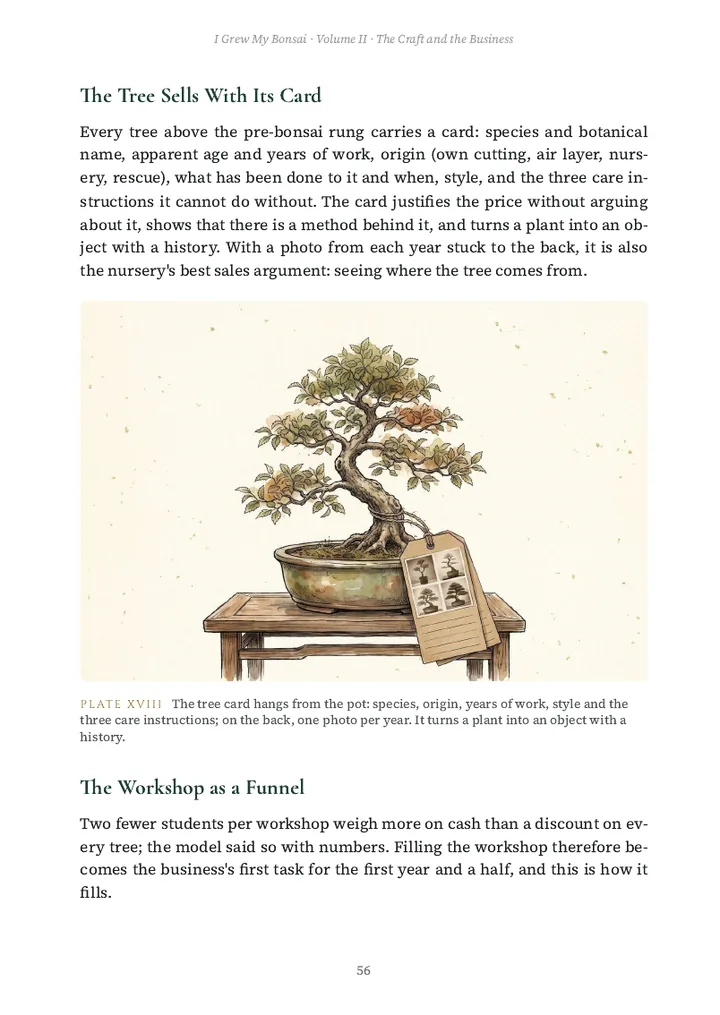
- Sell without pushing: your brand, the tree's tag, workshops, corporate rentals
- Know what to check, legally and for tax, in the US, UK, Canada, Australia and New Zealand
- Spot the nine ways nurseries die, each with its early warning sign
- Follow your first twelve months, month by month
Costs and projections are working assumptions, marked as such in the book, for you to swap with your own numbers. The book doesn't promise income or give financial, legal or tax advice.
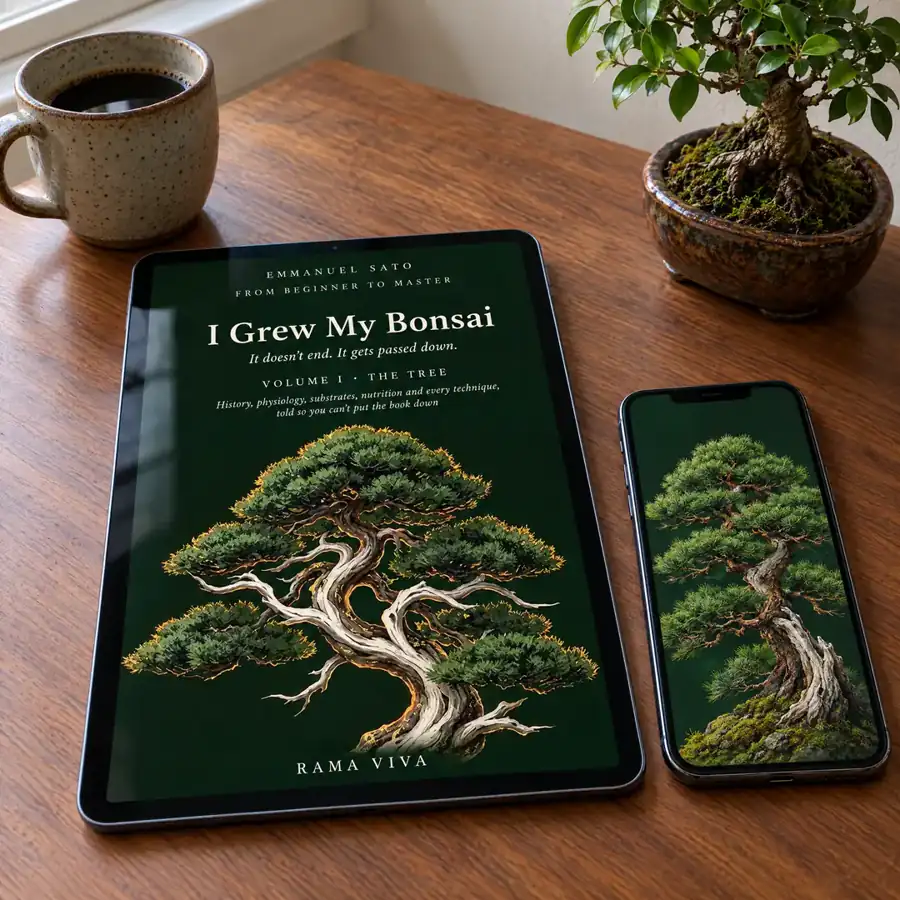
On your phone, next to the tree.
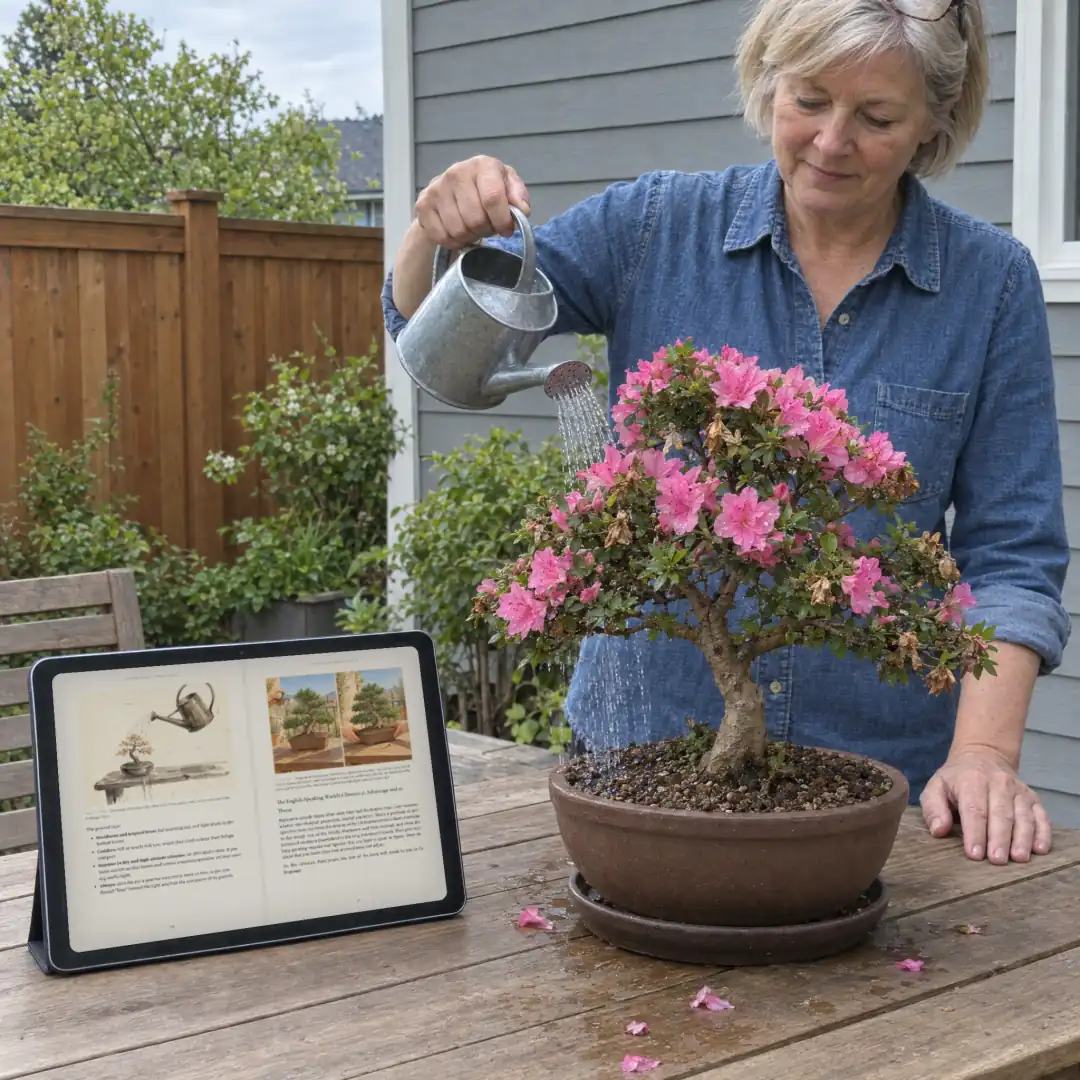
You read it at the workbench with soil on your fingers, on a tablet in the evening, or printed and clipped to the table outside. Full color. No app, no account.
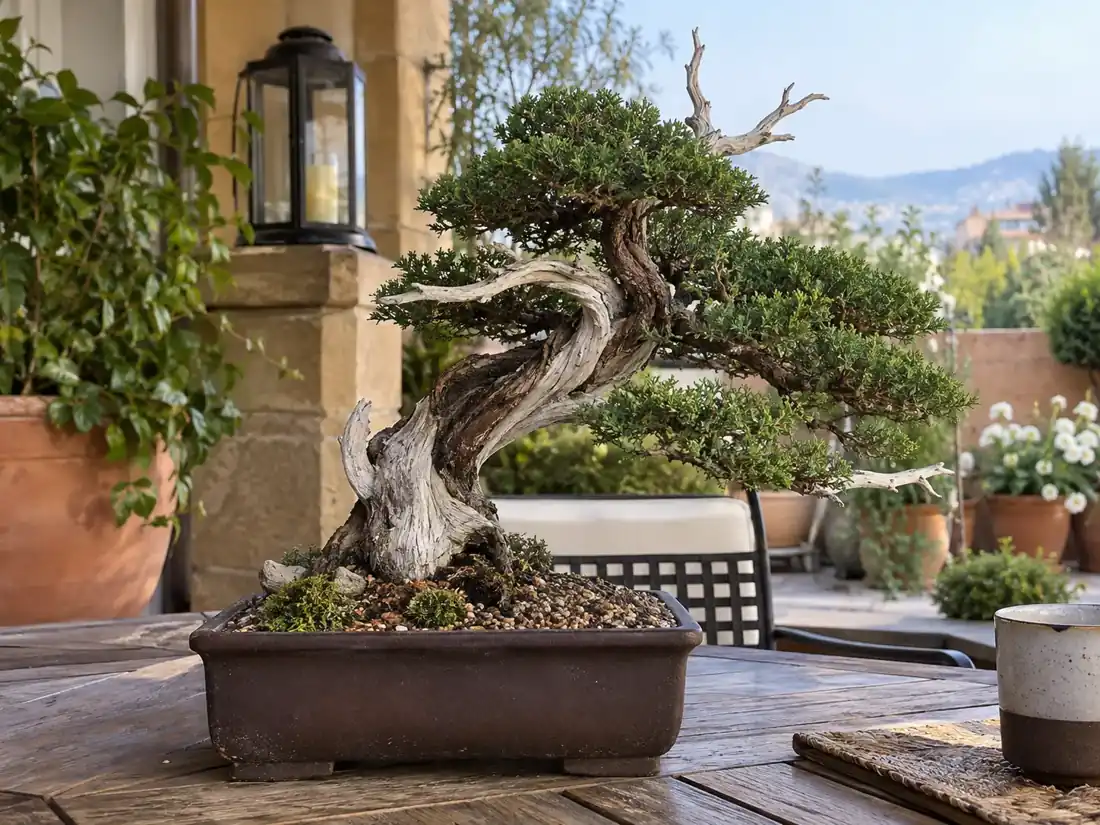
You might be thinking it's one more bonsai book written for people with a greenhouse. It isn't. It also isn't for everyone, and you should know before paying.
- You've never had a bonsai and you don't want the first one to die
- You have one, or you lost one, and you want to know exactly what happened
- You bought an "indoor bonsai" and it's dropping leaves in the living room
- You have a few, twenty tabs open, and still no idea what to do first
- You're tired of calendars written for someone else's climate
- Someone asked what your tree is worth and you didn't know what to say
- You want a craft that can gain value with time instead of losing it
- You want a garden-center tree to look a hundred years old by next month
- You want a side income that doesn't involve watering
- You'd rather have income promises than tables of assumptions with their sources
- You won't read 325 pages. It's long on purpose: a full course in book form
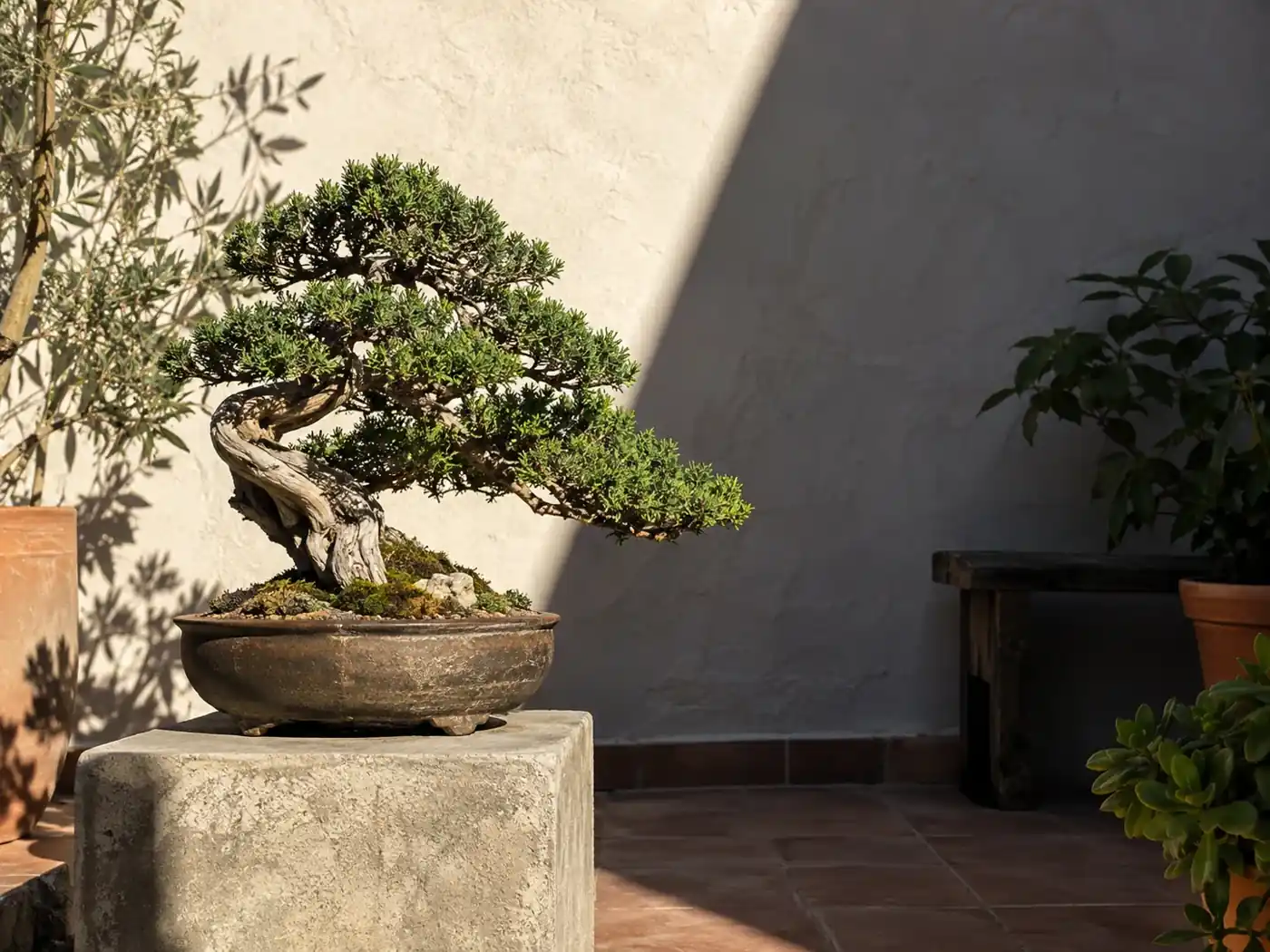
Your first tree, kept alive. Your tenth, the one people ask about.
Instant download: read it next to the tree, on a tablet, or printed for the workbench. The links also go to your email.
The whole bonsai method, from zero.
Killed one before? Start here.
- A tree to pass down to the ones you love
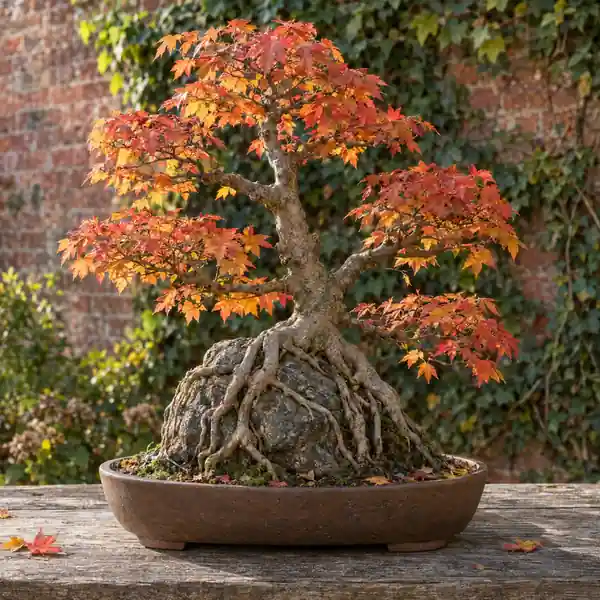
- The wild techniques too: roots over a rock
- What to do each month, in your hemisphere
- Why your last one died, and how to avoid it
Only for the next 9 buyers today
Other collections
A Desert on My Windowsill🌵 Succulents · both volumes+$9.90 USD $50.00
From One Plant, I Grew Twenty🌱 Cuttings · both volumes+$9.90 USD $50.00
- Instant download, no app or account
- The links also go to your email and don't expire
- Pay by card, in your currency
- Stuck with your tree? A person writes back
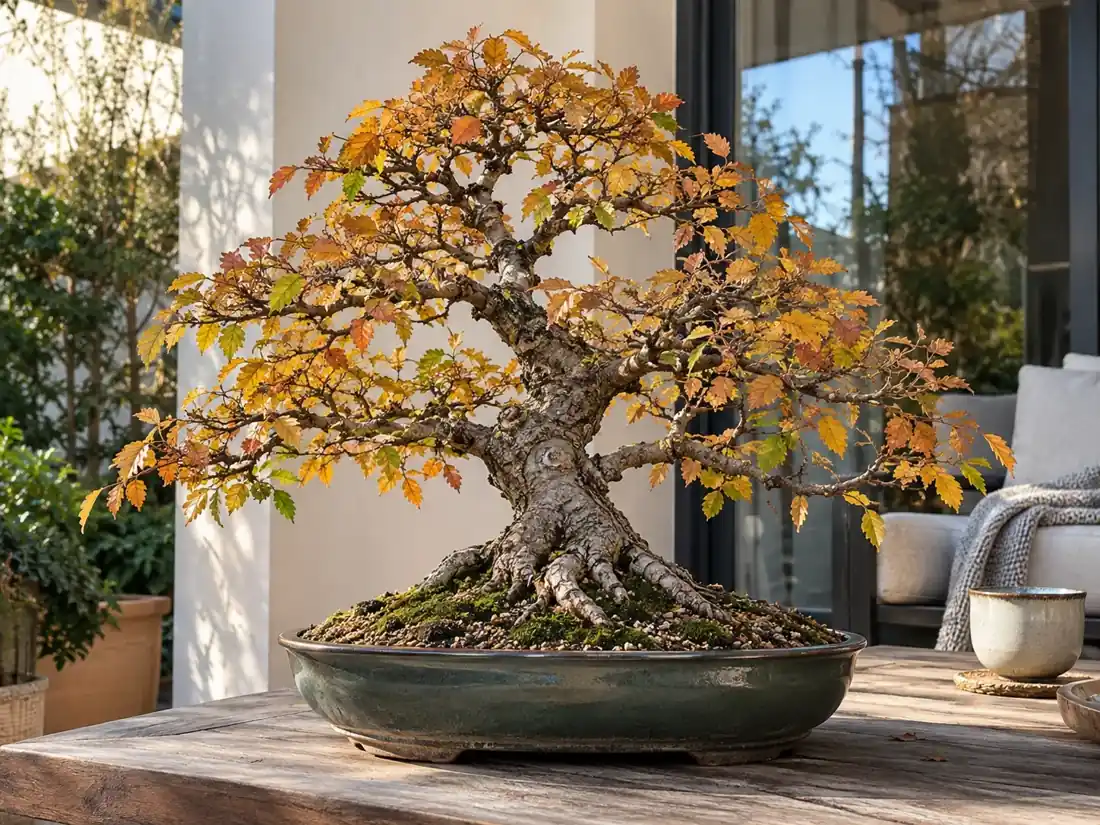
Every season you let pass is a year of tree that doesn't come back.
Bonsai runs on a clock you can't negotiate with: repotting at the end of winter, cuttings in spring, decandling at the start of summer, wiring conifers as autumn begins. South of the equator, the same steps with the months turned around. Miss the window and the next one comes next year. Whoever starts with the right calendar is twelve months ahead of whoever started "when there was time."
Most people read in the quiet months and get their hands dirty when the window opens. The book tells you which month each thing happens in your climate. What it can't do is wait for you.
You could be reading the first chapter tonight.
What people ask before buying
I've never owned a bonsai. Is it too advanced?
It starts from zero, and it doesn't stop there. Begin with three chapters: your first tree, watering, and the tree's year. The rest grows with you for years. It's written so you never need to buy another bonsai book.
What does it cost to start, besides the book?
One tree and six tools. Your first tree comes from an ordinary garden center, at ordinary plant prices; the book teaches you to choose it. Stainless-steel tools are fine to start; Japanese carbon steel can wait. What you don't need in the first year: expensive pots, imported wound paste or seed kits.
Mine says "indoor bonsai" on the label. Is that wrong?
Usually, yes. Most trees sold that way are outdoor trees: junipers, elms and most other species need the seasons outside, and indoors they decline slowly. The ficus is the one that truly lives indoors, at a bright window. The book helps you work out what you have and where it should live.
Is there a guarantee?
Yes, 90 days. If you haven't downloaded the files, write to contacto@laramaviva.com within 90 days of your purchase and we refund you in full, no questions asked. Once the files are downloaded, the sale is final: they are digital books delivered in full the moment you open them. If you were charged twice or something went wrong with your order, we fix it or refund it at any time.
How do I receive it?
Once payment goes through, your download links appear on screen and a copy goes to your email. The links don't expire, so you can come back to them.
Another question? Write to contacto@laramaviva.com. A person answers.
More from the first readers
“Already gone back to the repotting chapter a few times. Handy book to have around.”
Rebecca S. · Chicago, Illinois“Got this for my mom, who has spent years saying she’s no good with plants. She called to tell me which tree she wanted to try and why. Nice that she could start making a choice without having to understand the whole book at once.”
Patricia L. · Albany, New York“Came for the care advice and ended up reading about why some little trees look so old. I notice trunks and branches differently now. Wasn’t expecting that from a practical guide.”
“Got the scissors out twice and put them away again. Reading the pruning section helped me understand what I was trying to do. Took the pages out to the patio and finally made a start.”
James F. · San Antonio, Texas“Glad I read the species section before settling on a spot in the living room.”
“Bought the book before I had a tree. I’d spent months saying I’d start and always found something else to research. Reading what to look for at the nursery helped me take that step. This is the one I brought home.”
“My husband used to watch videos and try to copy the trees. The book got him looking at his own and thinking about what he could do with that one. Got a whole explanation about wire over dinner the other night.”
“Printed the pages I needed. The rest stays on my tablet.”
Charles K. · Vancouver, British Columbia“Really useful having the Southern Hemisphere in the calendar. I was getting tired of finding advice and then having to swap all the months around. Saved that section to come back to.”
“Wanted something to do after work besides sitting in front of another screen. I read a bit, then go out and look at the tree. Some evenings that’s all I do. I’m enjoying learning it without feeling I have to get through everything at once.”
“The watering bit was really useful. I was watering every day because I thought that was helping.”
Laura M. · Sacramento, California“Had a cart full of tools before I even had a tree. Read that section before ordering and ended up buying a lot less. Liked knowing what each thing was for and what could wait. I’ve started enough hobbies with a huge shopping bill.”
Susan K. · Houston, Texas“Bought it for Dad. He sends me photos of his tree now and explains why he kept one branch and removed another. Before this he just used to say he liked bonsai.”
Rachel T. · Tampa, Florida“Sent the PDF to my Kindle and I’ve been reading a bit at night. Already bookmarked the bit about choosing a first tree.”
Daniel H. · New York, New York“I’ve only got a small balcony. The species table helped me work out what might suit it before buying something just because I liked the photo. Could’ve used that advice with a few other plants.”
Jennifer P. · San Diego, California“My wife had already lost one and didn’t want to buy another. The bits about light, roots and soil interested her because she’d just been following bits of advice before. We went to the nursery at the weekend with a much better idea of what we were looking for.”
Mark W. · Dallas, Texas“Finally understood why the potting mix matters. I’d been treating it like any other houseplant.”
Angela R. · Orlando, Florida“Printed the repotting pages and took them outside. Glad the preparation came first, because I was just about to pull the tree out of its pot.”
Carol B. · Philadelphia, Pennsylvania“I still watch videos. What I needed was some idea of what order to do things in, and the book helped with that. Had about twenty tabs open before and still didn’t know where to start.”
Melissa J. · San Jose, California“Thought it all started with a seed and years of waiting. The nursery-tree section changed my mind about that. Mine has a long way to go, but I’ve got something to learn on now, which was the point.”
David C. · Austin, TexasStarting a tree means accepting you won't finish it. And doing it anyway.
Your first tree is at a garden center near you. You'll know which one.
We use cookies to measure visits. Learn more